
• Home
    • Sketchbook
    • Paintings
  • Blog
  • About Me
  • Contact
Menu

friendscallmep

  • Home
  • Personal Works
    • Sketchbook
    • Paintings
  • Blog
  • About Me
  • Contact

P’S BLOG


Subscribe

Sign up with your email address to receive news and updates.

We respect your privacy.

Thank you!

Black History 365 | # 292 Julia Jacobs

January 27, 2026

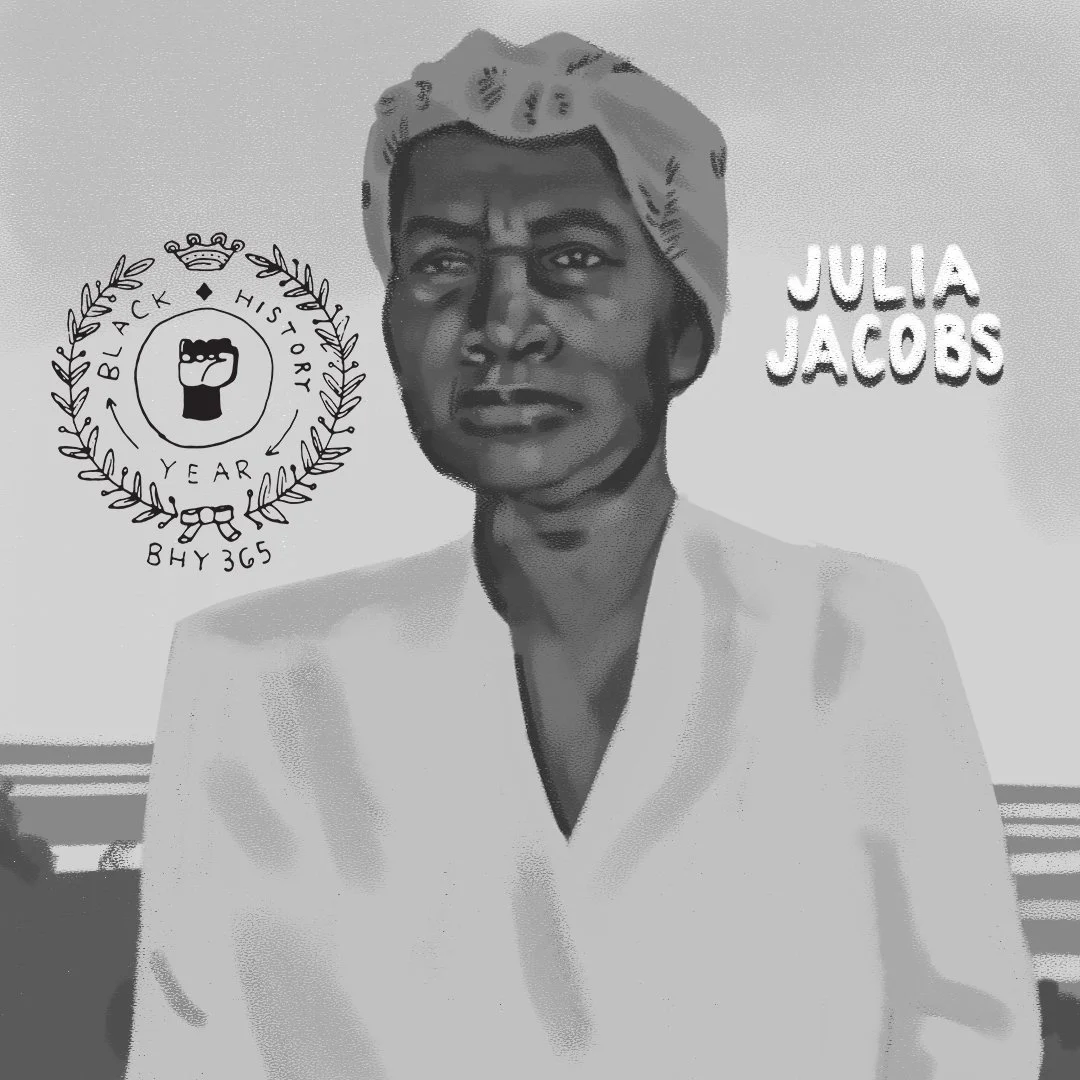
Julia Jacobs is the currently accepted story of Blackness in Native American tribes. In 2022, the Suquamish Tribe accepts and honors Black History Month on their https://suquamish.nsn.us/ website. Julia Jacobs was an important culture bearer for the Suquamish Tribe, now located on the Port Madison Indian Reservation, in Washington State. Although Chief Seattle (Sealth) for whom the city of Seattle is named, is the most famous member of the tribe, many of the current members and descendants of the Suquamish Tribe can trace their lineage back to Julia Jacobs. She was born in 1874 aboard a Portuguese ship in the Puget Sound Region to an enslaved woman. Her mother died during Julia’s birth and her father, possibly a cook on board, could not keep her. The last chief of the Suquamish Tribe, Chief Jacob Wahalchu, and his wife, Mary, adopted the baby and raised her as their own. Julia Jacobs was taught tribal traditions from her parents, Jacob and Mary. She was fluent in Lushootseed, the language of the Suquamish Tribe and many other Puget Sound tribes. She attended the Tulalip Indian Boarding School near Priest Point, Washington alongside other Native American children in the area, where she, like the others enrolled, was unable to practice her Suquamish traditions. Despite the contributions Julia Jacobs made to the continuation of Suquamish culture, through an era of assimilation, she is not recognized on the tribal rolls of the Suquamish Tribe. Nonetheless, she played a key role in preserving the culture. Julia Jacobs passed away in 1960 at the age of 86 and was laid to rest in Suquamish, next to her father, Jacob Wahalchu, and her mother, Mary Wahalchu. She has since been joined by her granddaughter, Evelynne Gemmell. Julia Jacobs showcases the diversity of tribal histories and identities particularly among the Coast Salish people.

Tags Black History 365
← Black History 365 | # 293 Elijah MuhammadBlack History 365 | # 291 Winnie Mandela →

Latest Posts

Featured
Black History 365 | #301 The Scramble For Africa
July 28, 2026
Black History 365 | #301 The Scramble For Africa
July 28, 2026
Read more →
July 28, 2026
Black History 365 | #300 Darryl "Cornbread" McCray
July 24, 2026
Black History 365 | #300 Darryl "Cornbread" McCray
July 24, 2026
Read more →
July 24, 2026
Black History 365 | #299 The Moors
July 22, 2026
Black History 365 | #299 The Moors
July 22, 2026
Read more →
July 22, 2026
Black History 365 | # 298 The African Middle-Men Of The Slave Trade
July 19, 2026
Black History 365 | # 298 The African Middle-Men Of The Slave Trade
July 19, 2026
Read more →
July 19, 2026
Black History 365 | # 296 The Creators of Race & The Transatlantic Slave Trade
July 16, 2026
Black History 365 | # 296 The Creators of Race & The Transatlantic Slave Trade
July 16, 2026
Read more →
July 16, 2026
Black History 365 | #297 The Industrial Revolution
July 12, 2026
Black History 365 | #297 The Industrial Revolution
July 12, 2026
Read more →
July 12, 2026
Black History 365 | # 295 The Transatlantic Slave Trade
May 20, 2026
Black History 365 | # 295 The Transatlantic Slave Trade
May 20, 2026
Read more →
May 20, 2026
Black History 365 | # 294 Moor With The Emerald Cluster
March 7, 2026
Black History 365 | # 294 Moor With The Emerald Cluster
March 7, 2026
Read more →
March 7, 2026
Black History 365 | # 293 Elijah Muhammad
February 1, 2026
Black History 365 | # 293 Elijah Muhammad
February 1, 2026
Read more →
February 1, 2026
Black History 365 | # 292 Julia Jacobs
January 27, 2026
Black History 365 | # 292 Julia Jacobs
January 27, 2026
Read more →
January 27, 2026