

The first American professional athlete to become a noted painter, recognized for his unique style of movement and energy. Ernie Barnes' involvement with art began at an early age, like most gifted adult artists. However, when he reached high school his creative endeavors were temporarily detoured in his determination to become a successful athlete. He graduated from his high school a hero and star football player, and with 26 full athletic scholarships to choose from. He chose North Carolina Central University and a major in art. After college he continued in an illustrious professional athletic career, but never let his love for football overshadow his love for art. You know his work! If you don’t…Good Times. Come on now. Ernie Barnes passed away April 27th in 2009 in Los Angeles California. His legacy lives on.
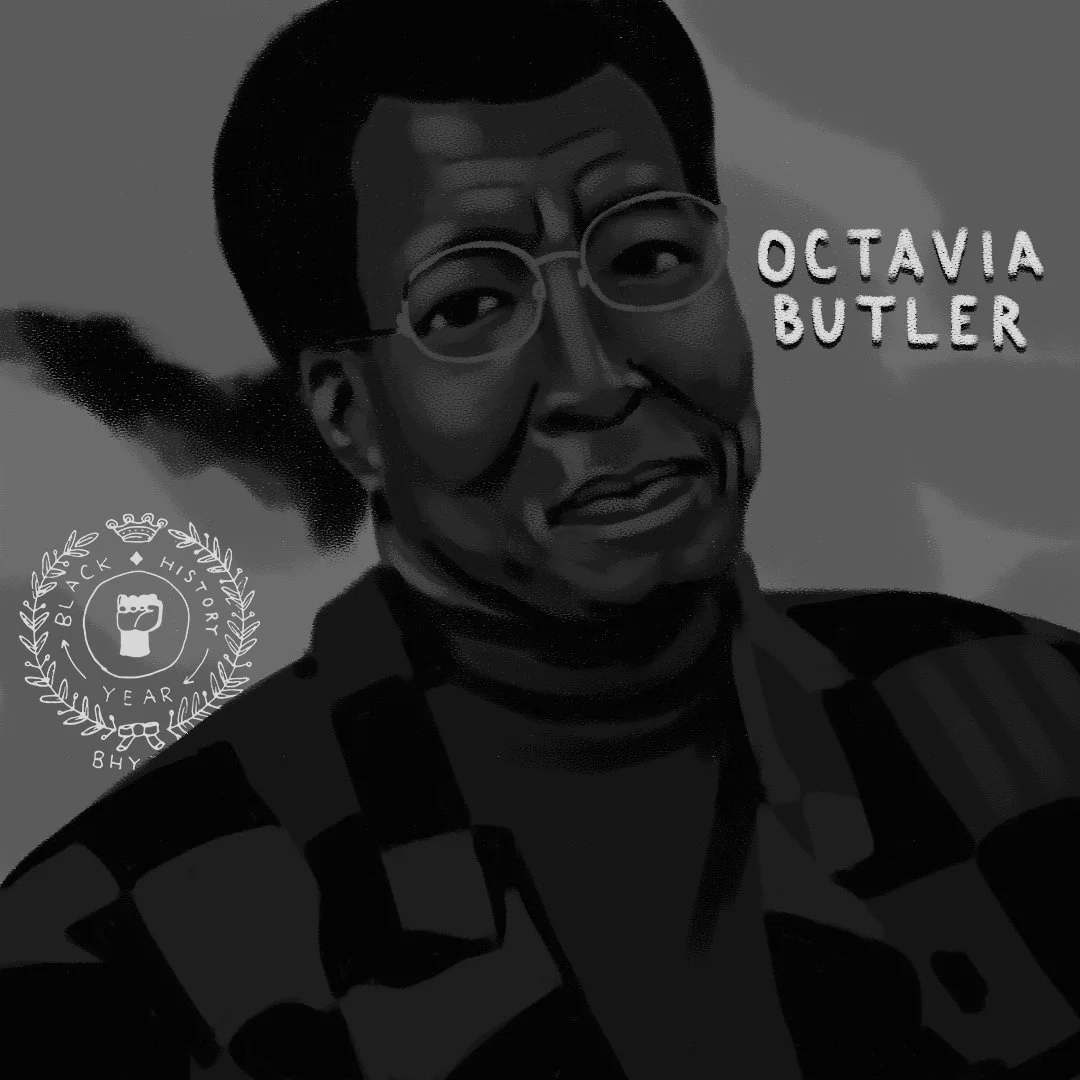
Black History 365 | # 192 Octavia Butler

Black History 365 | # 191 Dr. Sebi
Dr. Sebi (1933-2016) was a pathologist, herbalist, biochemist, and naturalist born in the Republic of Honduras (República de Honduras) in Central América. He studied and personally observed herbs in Africa, North America, Central and South America, and the Caribbean, and developed a unique approach and methodology to healing the human body with herbs rooted in over 30 years of experience. He was born Alfredo D. Bowman on November 26, 1933, in the village of Ilanga in Spanish Honduras. He was dragged into court on multiple occasions: in 1987, he was charged for practicing medicine without a license (a case he won), and then he was hit with a civil lawsuit from New York Attorney General’s office preventing him from making his so-called therapeutic claims in New York newspapers. His death is cloudy and unfortunate to read about. Do your research. Dr. Sebi’s legacy still lives. Rest in peace & power.

Black History 365 | # 190 James Baldwin
James Baldwin (1924–1987) was a writer and civil rights activist who is best known for his semi-autobiographical novels and plays that center on race, politics, and sexuality. His childhood neighborhood would later inspire his first essay, The Harlem Ghetto (1948). In 1948, feeling stifled creatively because of the racial discrimination in America, Baldwin traveled to Europe to create what were later acclaimed as masterpieces to the American literature canon. While living in Paris, Baldwin was able to separate himself from American segregated society and better write about his experience in the culture that was prevalent in America. Baldwin took part in the Civil Rights Movement, becoming close friends with Medgar Evers, Reverend Martin Luther King Jr., Malcolm X, Maya Angelou, Nina Simone, and Lorraine Hansberry. He was also one of the first Black writers to include queer themes in fiction, notably in Giovanni’s Room (1956), writing with a frankness that was highly controversial at the time. The successive assassinations of Evers, Malcolm X and King in the late 1960s plunged Baldwin into a nervous breakdown. In 1971, he moved permanently to France, settling in a small village in Provence, Saint-Paul de Vence, which was to become his final resting place. In 2016 Baldwin was the subject of an Oscar-nominated documentary by director Raoul Peck, I Am Not Your Negro. The film mixed archival footage of the civil rights movement with contemporary footage of the BLM movement and included historical interviews with Baldwin.

Black History 365 | # 189 Gordon Parks
Gordon Parks was a self-taught photographer, writer, composer, and filmmaker. Parks is remembered as the first African-American photographer who worked for Vogue and Life magazines, known for his documentary photojournalism of the 1940s through the 1970s. He captured iconic images of the civil rights movement, investigating important turning points in inner cities around the United States. Along with these charged moments, he also captured candid portraits of artists and musicians. If you don’t know his work, get familiar. You might already be familiar, after all Gordon Parks, is one of the greatest photographers of the twentieth century.