
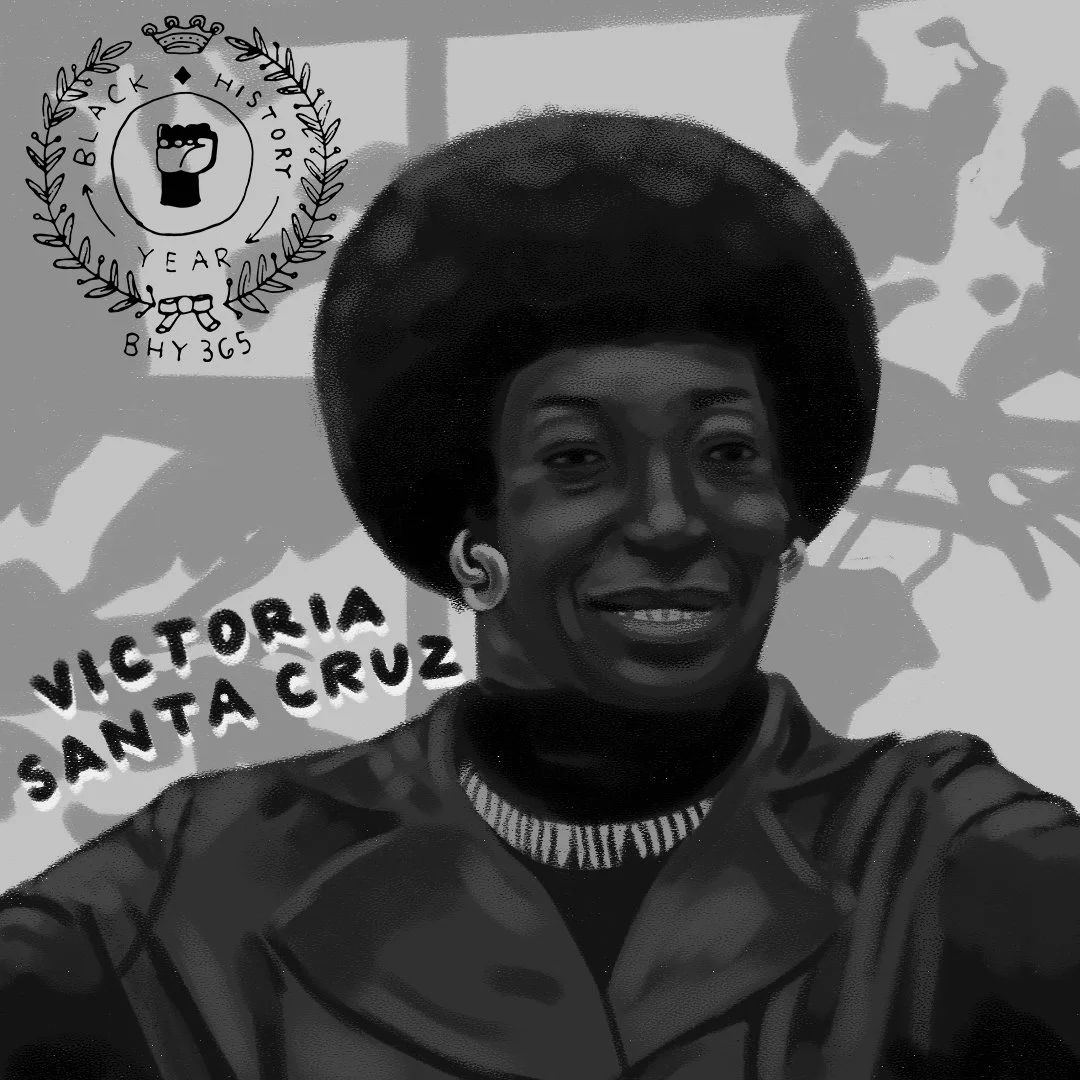
In Latin America, the construction of race is varied and has, throughout history, undergone significant changes. During the colonial period, racial identities were ruled by an elaborate caste or casta system that determined what position in the social hierarchy citizens occupied. The system was one of the many ways that Spanish and Portuguese colonizers held onto their power and maintained superiority. The system remains unofficially in place despite the passage of time since the official end of colonization. Afro-descendant and Indigenous people make up 40% of the population in Latin America, yet they are often placed at the margins of society, with the region embracing a White-European visual representation that does not accurately depict the ethnic and racial makeup. This has resulted in the erasure of Afro-Latina contributions to various Latin American cultures. Many activists, artists, musicians, and entertainers have sought to reinscribe these ignored histories. Among these cultural workers was choreographer, composer, and activist Victoria Santa Cruz. Victoria Santa Cruz (Victoria Eugenia Santa Cruz Gamarra) is widely considered the mother of Afro-Peruvian dance. Born in Lima, Peru, on October 27, 1922, she was the eighth of ten children. Her father was Nicomedes Santa Cruz Aparicio, and her mother, Victoria Gamarra Ramirez. Her father worked as a playwright and her mother was an accomplished singer and dancer of traditional Peruvian styles. After an artistic career lasting 53 years, Victoria Santa Cruz died in Lima, Peru on August 30, 2014. Her legacy and impact on the culture continues to be celebrated. In October 2021, Peru’s Ministry of Culture launched the Victoria Santa Cruz Centennial with programs and activities. In addition, the Fulbright Commission in Peru launched the Victoria Santa Cruz Fulbright Grant to Afro-Peruvians perusing graduate study in the United States. Thank you for your contributions.
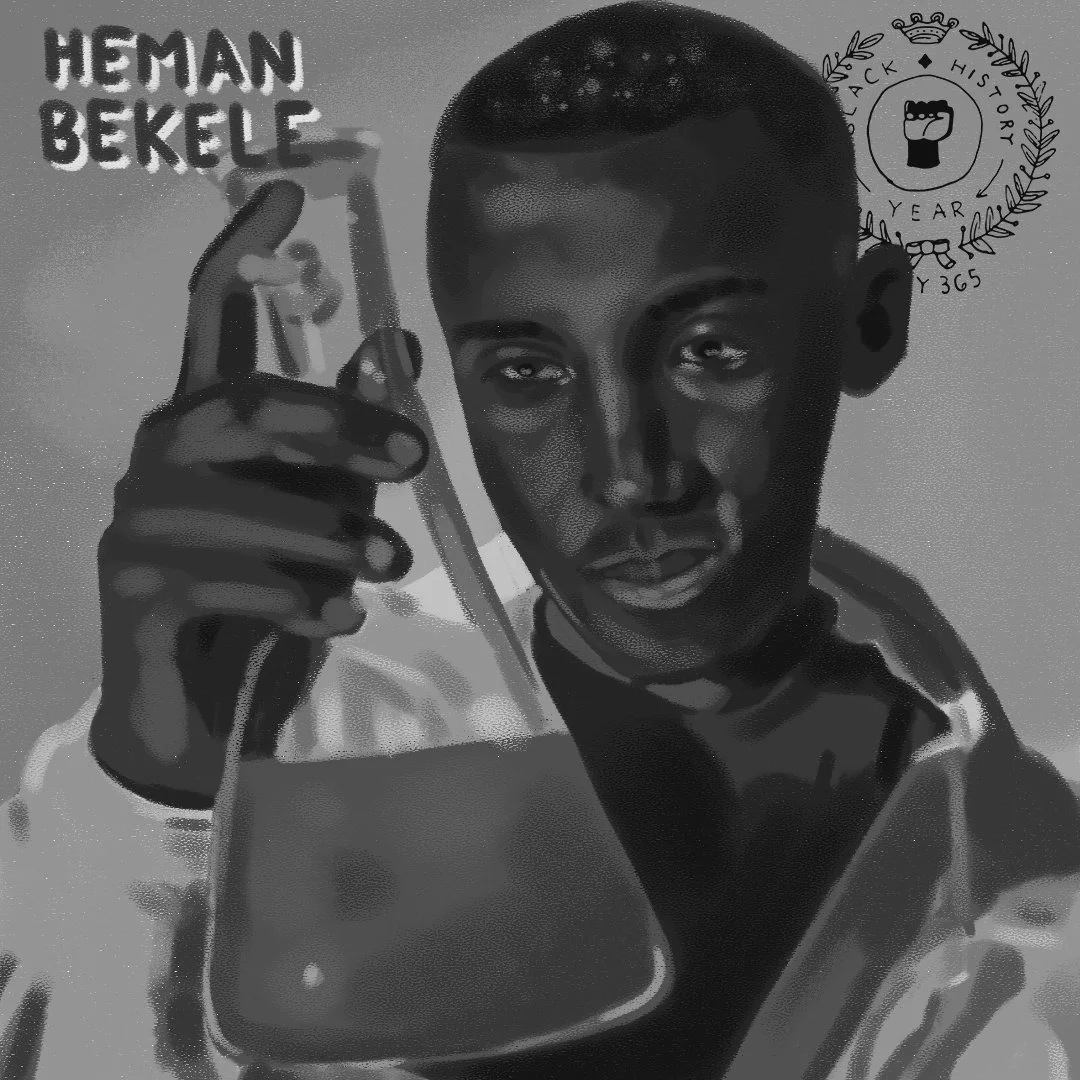
Black History 365 | # 254 Heman Bekele
Heman Bekele was Time Magazine’s Kid of the Year in 2024. Born in Addis Ababa before emigrating to the U.S. with his family when he was 4, Heman recalls that some of his earliest memories were of seeing laborers working in the blistering sun, usually with no protection for their skin. His parents taught him and his sisters—Hasset, now 16, and Liya, now 7—to cover up, and explained the dangers of too much time outdoors without sunscreen or proper clothing. This led to his experiment. His goal is to create a soap that could treat skin cancer, and to make it affordable for everyone who needs it. His work won him the grand prize in the 3M Young Scientist's Challenge, a competition that encourages kids to think of unique ways to solve everyday problems. He’s quoted as saying: “I've always been really passionate about science and how things work. Then, slowly, as I grew up, that curiosity started to develop into something more. Growing up in Ethiopia, I always thought people were always getting hit by the hot sun working outside. I didn't think much of it when I was really little, but as I grew up I realized how big of an issue [skin cancer] really is. Not only in Ethiopia but everywhere around the world. And when [people] do end up getting skin cancer, it's crazy expensive [to treat] and not affordable in the slightest. Skin cancer does have cures and skin cancer is treatable in most cases. However, the average price of skin cancer treatment globally is almost $40,000. When I heard those really shocking statistics it really inspired me to create a more affordable and accessible solution. I started doing experiments and working on different things, then that turned into my bar of soap as a project.” RIGHT ON! PEACE KING!

Black History 365 | # 253 Beverly Buchanan
Get familiar with Beverly Buchanan. In 1971, Buchanan enrolled at the Art Students’ League, where she studied with Harlem Renaissance painter Norman Lewis. From that time on, Buchanan devoted her time to making art. In the 1970s, she considered herself an abstract expressionist painter and completed a series of “Wall” paintings which were exhibited at the Montclair Art Museum in New Jersey in 1976. She held degrees in parasitology, public health, and medical technology. In the early 1970s, while a health educator, she declined acceptance to medical school to become an artist. Buchanan acknowledged that it was a difficult choice, but she desired to “express the images, stories, and architecture of her African American childhood.” In 1981, Buchanan strategically placed her Georgia land work Marsh Ruins near the site of the 1891 mob lynching of Wesley Lewis and Henry Jackson and overlooking St. Simons Island, where a group of Igbo people sold into slavery drowned themselves in 1803. This work addresses the soiled history of the South while memorializing victims of racism. Buchanan earned a BA from Bennett College, and an MS and MPH from Columbia University. She is the recipient of awards such as the John Simmon Guggenheim Memorial Foundation Fellowship (1980); the National Endowment for the Arts Fellowship (1994); and the Anonymous Was A Woman Award (2002). The Studio Museum has presented her work in exhibitions including Ritual and Myth: A Survey of African American Art (1982); The Decade Show: Frameworks of Identity in the 1980s(1990); and When the Stars Begin to Fall: Imagination and the American South (2014). She died 2015 in Ann Arbor, MI, rest in peace & respect to her legacy.
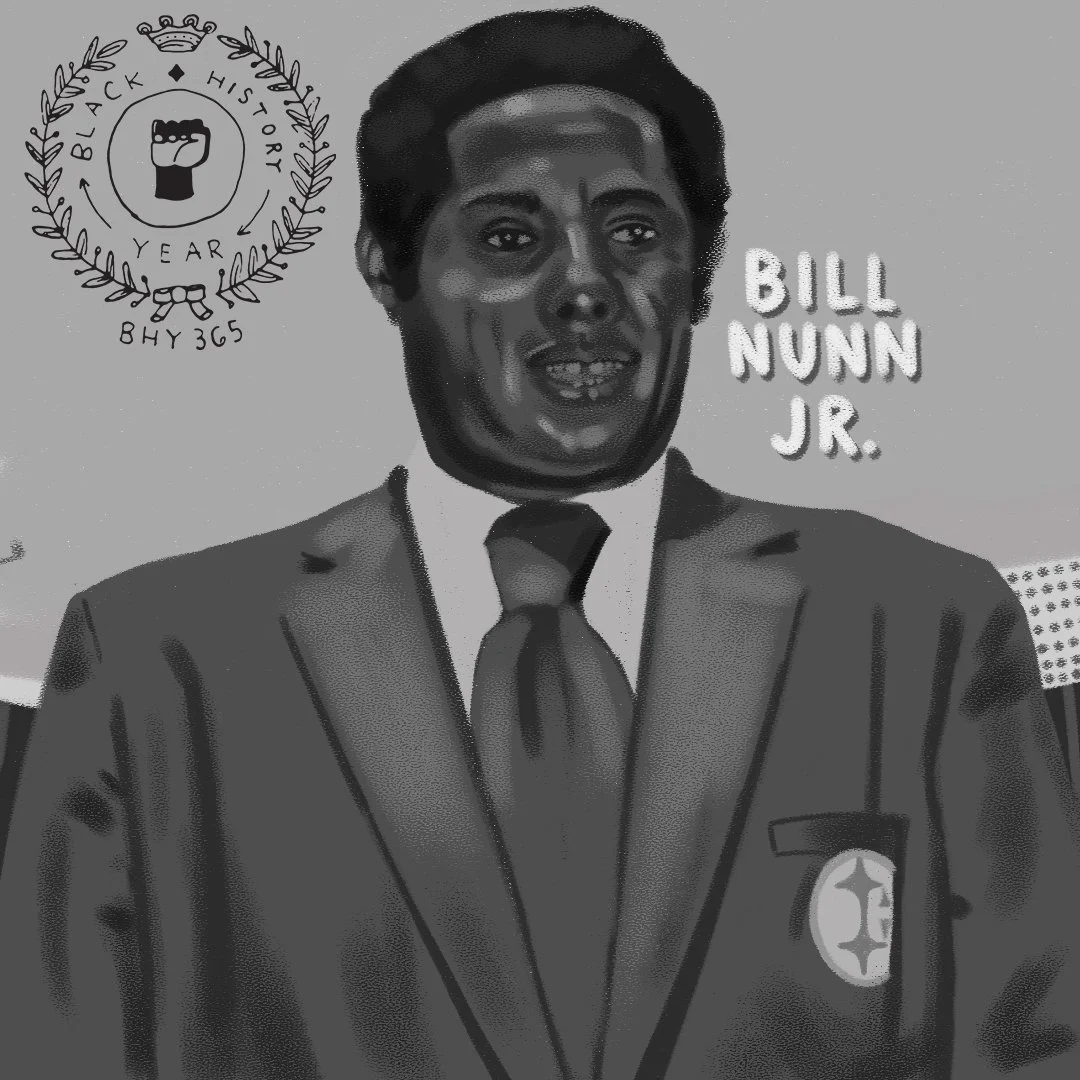
Black History 365 | # 252 Bill Nunn Jr.
Peace to the legend Bill Nunn Jr! Aside from being the architect for The Steelers dynasty. He revolutionized the game. When the 1970s Steelers dominated the NFL, winning four Super Bowls in six years and cementing their place as one of the greatest dynasties in football history. Nunn was behind their success — his impact went far beyond the trophies. He was legendary scout and talent evaluator and changed the NFL forever by opening the doors for players from Historically Black Colleges and Universities (HBCUs). Before Nunn, many NFL teams overlooked HBCU talent, despite the wealth of skilled players in these programs. As a former journalist for the Pittsburgh Courier, one of the most influential Black newspapers in America, Nunn had deep connections with HBCU coaches and players. He saw firsthand the incredible talent being ignored by professional teams. When the Steelers hired him as a scout in 1967, Nunn used his knowledge to bring in hidden gems like Mel Blount, John Stallworth, and Donnie Shell—players who would become Hall of Famers and key pieces of the Steelers' dynasty. His influence reshaped the league and paved the way for countless Black athletes to get the recognition they deserved. And just like the athletes he paved the way four, he also didn’t get the recognition he deserved. Seven years after his death, that day came. “Induction for Hall of Fame Finalist Bill Nunn long overdue,” an article from the HoF’s website read like it should in 2021. Thank you for your contributions.

Black History 365 | # 251 Paul Revere Williams
Paul Revere Williams is known as one of the greatest American architects. Born to Chester Stanley and Lila Wright Williams, Paul Revere Williams (1894-1980) braved a challenging adolescence to become one of the defining architects of his era, shattering expectations and prejudice, all while beautifying landscapes across the country. Before his fourth birthday, Williams’ father and mother had both passed away from tuberculosis, resulting in he and his brother being sent to separate foster homes. In school, Williams was often isolated in his experience as a Black student, sometimes even facing direct confrontation from teachers; upon expressing his interest in pursuing architecture as a career, William’s high school teacher stated plainly: “Who ever heard of a Negro architect?” Williams reflected on his transition from student to working architect – having graduated from Polytechnic High School in 1912 and enrolling in a three-year architectural engineering program at University of Southern California in 1916 – in a 1937 essay for American Magazine, titled “I Am a Negro”. In his writing, Williams stated that his goal was to “force white people to consider [him] as an individual rather than a member of a race”. A prolific architect, Williams designed more than 3,000 buildings before his death in 1980. His touch is evident at the five-star Beverly Hills Hotel; the cursive lettering on its iconic sign is based on his own handwriting. Hired to revive the hotel’s allure after the Great Depression, Williams infused the spaces with flair. When he was working on the hotel in the 1940s, he wasn’t allowed to stay overnight or even eat by the pool because of his race. Google all the buildings that he has created. Prolific is an understatement. In 2017, Williams was posthumously awarded the AIA Gold Medal, one of the highest honors of his chosen profession; it is still the case today that only 2 percent of the nation’s licensed architects are Black or African American. Respect to your legacy.