
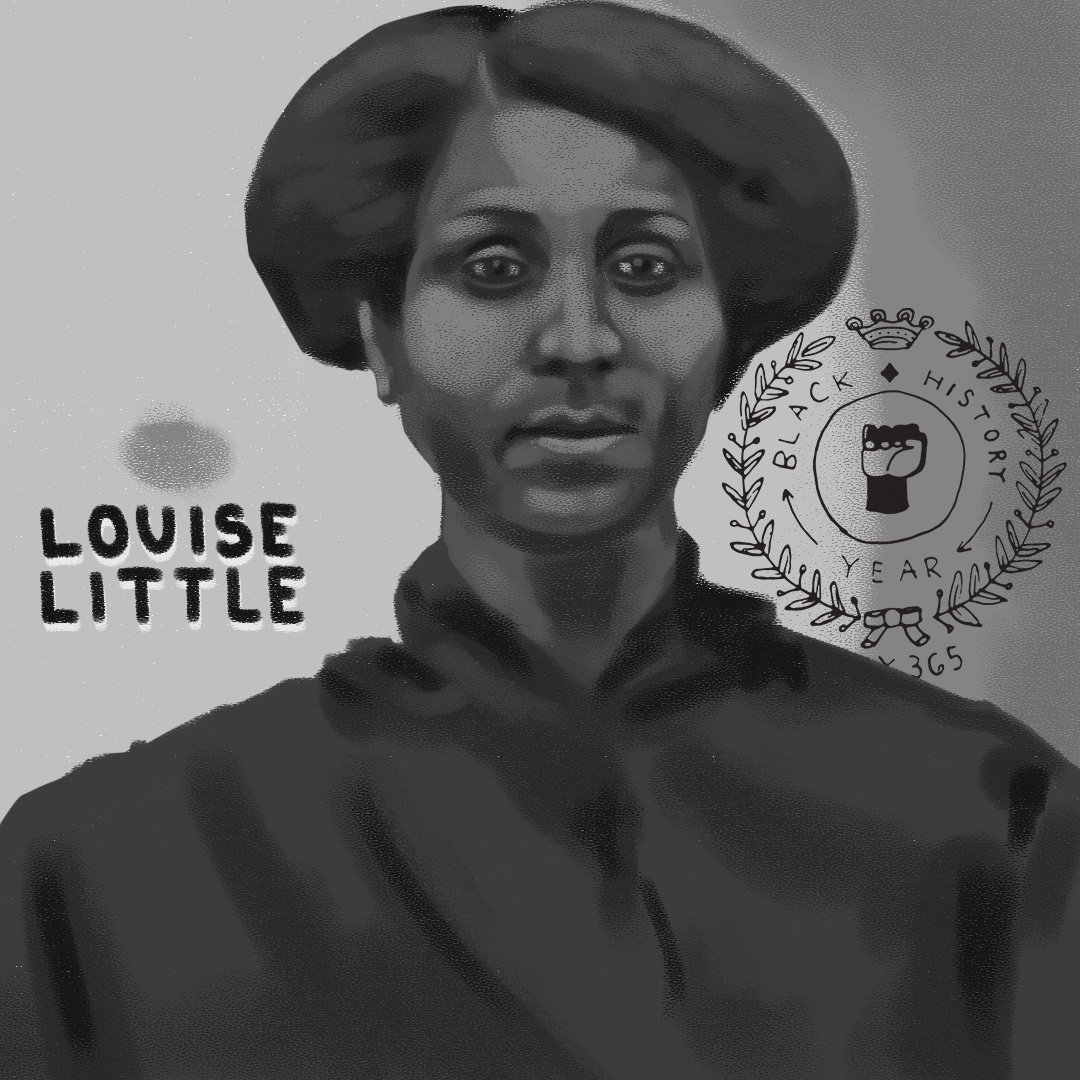
Peace to Louise Little. May God watch over the Little’s for eternity. Little is known about Louise Little — she was put in a mental asylum and her children were left to the state. This was 14 years after her house was burned down by the KKK due to her and her husband’s activism. She was pregnant with Malcolm X at the time. She was widowed at the time of being put in the mental asylum and she remained there for 25 years. Louise and her husband, Earl, were unapologetic activists who pushed a message of revolution in the new Black communities of the unwelcoming Midwest. They were targeted by the KKK as a result. She had waged an eight-year battle against welfare workers, police and judges. Helen Louise Langdon was born on the Caribbean island of Grenada between 1894 and 1897. Her father was white, but it is unknown the nature of the relationship between the father and mother whether it was one of consent or not. Louise was a baby when her mother died, so she was raised by her grandmother Mary Jane Langdon and her aunt Gertrude. Mary Jane and her husband, Jupiter, who also died when Louise was small, were captured in West Africa when they were young but were freed by the British Navy sometime after 1833, when imperial Britain banned slavery. Louise studied at a local Anglican school, excelled in writing, spoke English, French and Creole and absorbed world history — however slanted a version — from the Royal Reader textbooks given to millions of children across the British Empire. Louise Little was immediately drawn to Marcus Garvey’s ethos of self-determination and Pan-African confraternity — as was Earl Little, a Baptist minister and recent immigrant who had escaped the violence of Jim Crow Georgia. The two married after meeting at a Garvey event. As the Little children began to attend school, Louise took on a new role: a prescient form of the activist parent. She worked to counter what the children were taught, correcting the routine slander about Black people to inoculate her children against self-hatred. Absolutely beautiful. Malcolm X is quoted as saying “…she was a most Faithful Servant of the Truth years ago. I praise Allah for her.”
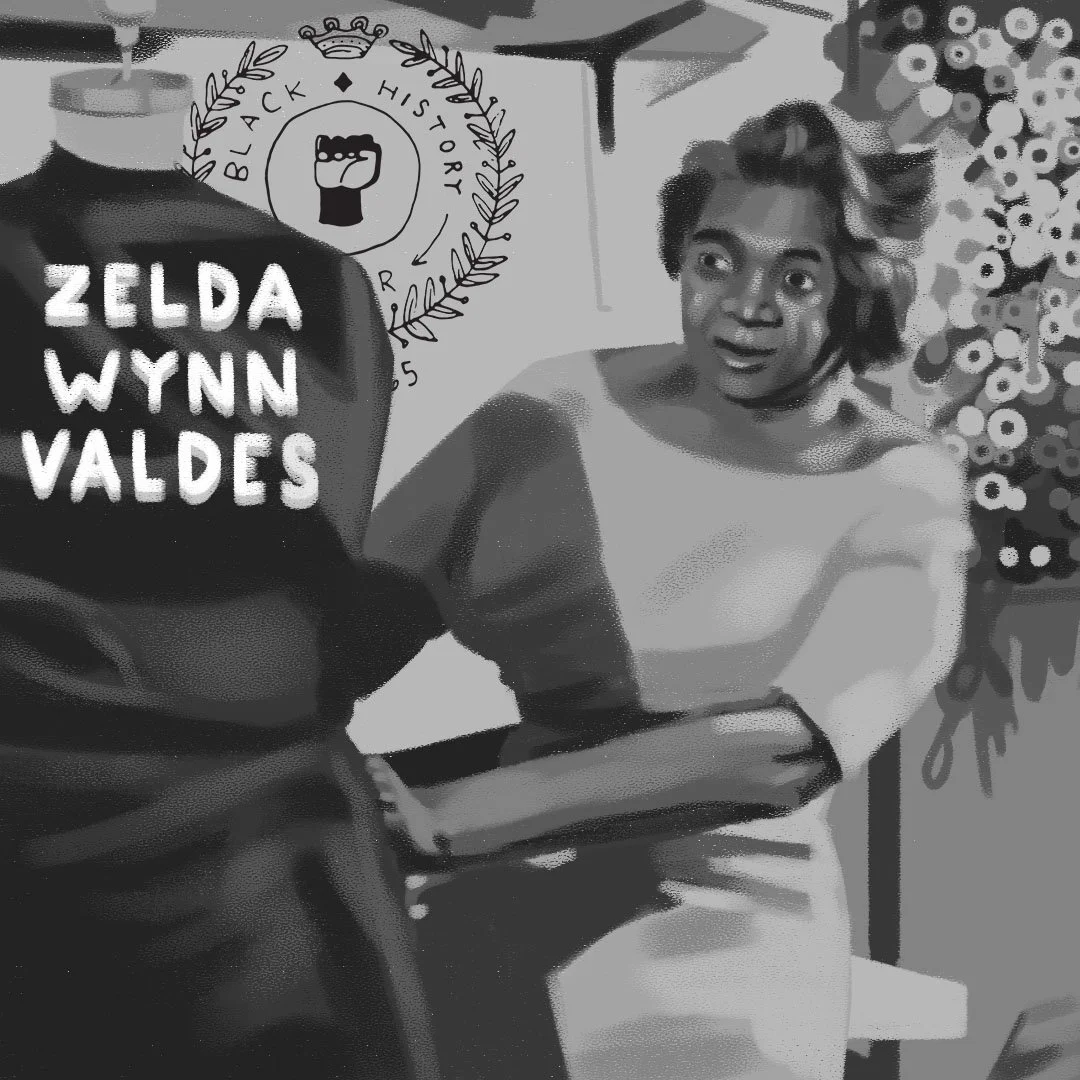
Black History 365 | # 282 Zelda Wynn Valdes
Your royal flyness. Shoutout to Zelda Wynn Valdes, the fashion and costume designer from Chambersburg, Pennsylvania. Her designs were worn by numerous celebrities and entertainers, including Dorothy Dandridge, Josephine Baker, Marian Anderson, Josephine Baker, Ella Fitzgerald, Mae West, Ruby Dee, Eartha Kitt, and Sarah Vaughan. She studied her grandmother’s work as a seamstress and also worked in her uncle’s tailoring shop. Valdes began working as a stock girl at a high-end boutique around 1920 and worked her way up to become the boutique’s first Black sales clerk and tailor. In 1948, at the age of forty-seven, Valdes opened the first African-American-owned boutique in Manhattan with her sister, Mary Barbour, as her assistant. Located at Broadway and West 158th Street, she called her store Chez Zelda. In 1958, Playboy magazine founder Hugh Hefner hired Valdes to design the first Playboy Bunny costumes. Hefner commissioned Valdes to do this work on the recommendation of the magazine’s promotion director, Victor Lownes. Originally, the Valdes design had the ears taller, and the ensemble lacked the trademark bow tie, collar, and cuffs. First unveiled publicly in an early episode of Playboy’s Penthouse Magazine, the bunny costume made its formal debut at the opening of the first Playboy Club in Chicago, Illinois, on the evening of February 29, 1960. In 1970, Arthur Mitchell asked Valdes to design costumes for his new company, the Dance Theater of Harlem. Valdes continued to work with the Dance Theater of Harlem until her death on September 26, 2001, at age ninety-six. We been the ones responsible for the standard of excellence. Salute.
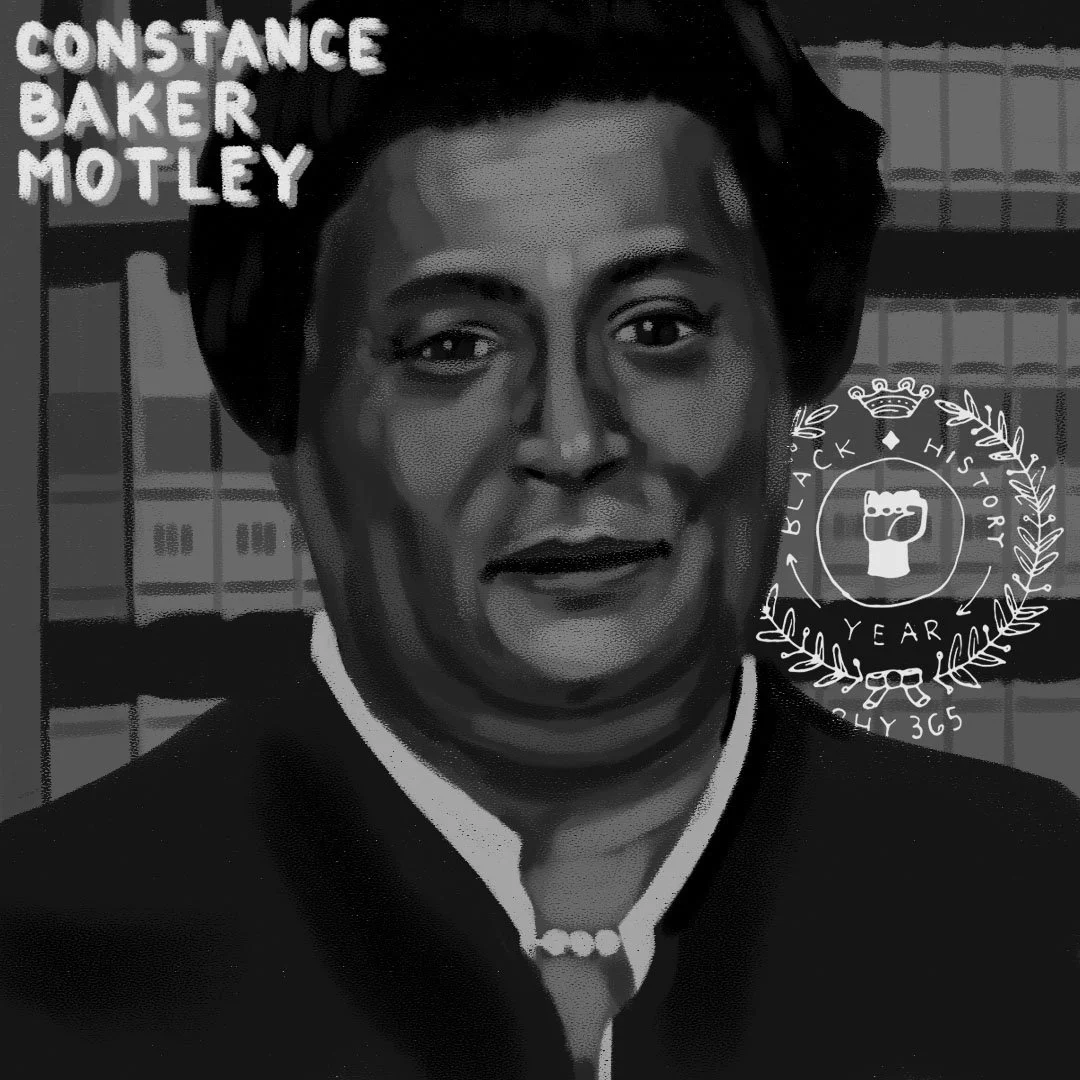
Black History 365 | # 281 Constance Baker Motley

Black History 365 | # 280 Michael Eugene Archer
Rest in power to Michael Eugene Archer, better known as D’Angelo has passed away at age 51 due to pancreatic cancer. Our thoughts and prayers go out to his children and family right now. A four time grammy winner his music has been monumental in forming the genre and our tastes today. He changed rhythm and blues forever. Taking heavy influence from Prince by the time he dropped his second album he created with a style solely his own. We’re thankful for the Black Messiah album a timeless classic. PEACE.

Black History 365 | # 279 Omar Ibn Said
In the name of God, the merciful the gracious. God grant his blessing upon our Prophet Mohammed. Blessed be He in whose hands is the Kingdom and who is Almighty; who created death and life that he might test you; for he is exalted; he is the forgiver (of sins), who created seven heavens one above the other. Know the name Omar Ibn Said. His name is a testament to how important reading and writing is. Also a reminder of how evil one must be to outlaw reading and writing. To be found doing so would result whippings and even death. Omar Ibn Said wrote in Arabic his life before and during slavery. Born in a wealthy family in Futa Toro along the border of present-day Senegal and Mauritania. He was a member of the Fula ethnic group of West Africa who today number over 40 million people in the region extending from Senegal to Nigeria. Omar Ibn Said writes that as he grew older he sought knowledge in Bundu, an area in Senegal today that had historically been controlled by another ethnic group, the Mande people, until the Muslim Fulas conquered the region in the second half of the 17th century. In Bundu he studied under his own brother Sheikh Muhammad Said, as well as two other religious leaders and "continued seeking knowledge for twenty five years." He then returned to his own town and lived there for another six years, until a "big army" came "that killed many people," captured him and sold him to a man who took him "to the big ship in the big sea." After sailing for a month he arrived in Charleston, South Carolina, where he was bought by a man called Johnson, who apparently was cruel to him. So he escaped, was captured and landed in jail in Fayetteville, North Carolina, where he spent 16 days. That is where he began writing in Arabic on the walls of his jail, and where he was discovered and eventually taken into the household of Jim Owen and his brother John Owen, the Governor of North Carolina (1828-1830) with whom he remained until his death in his late eighties. THIS is a reminder to read and write. Never stop reading and writing. Bless.