
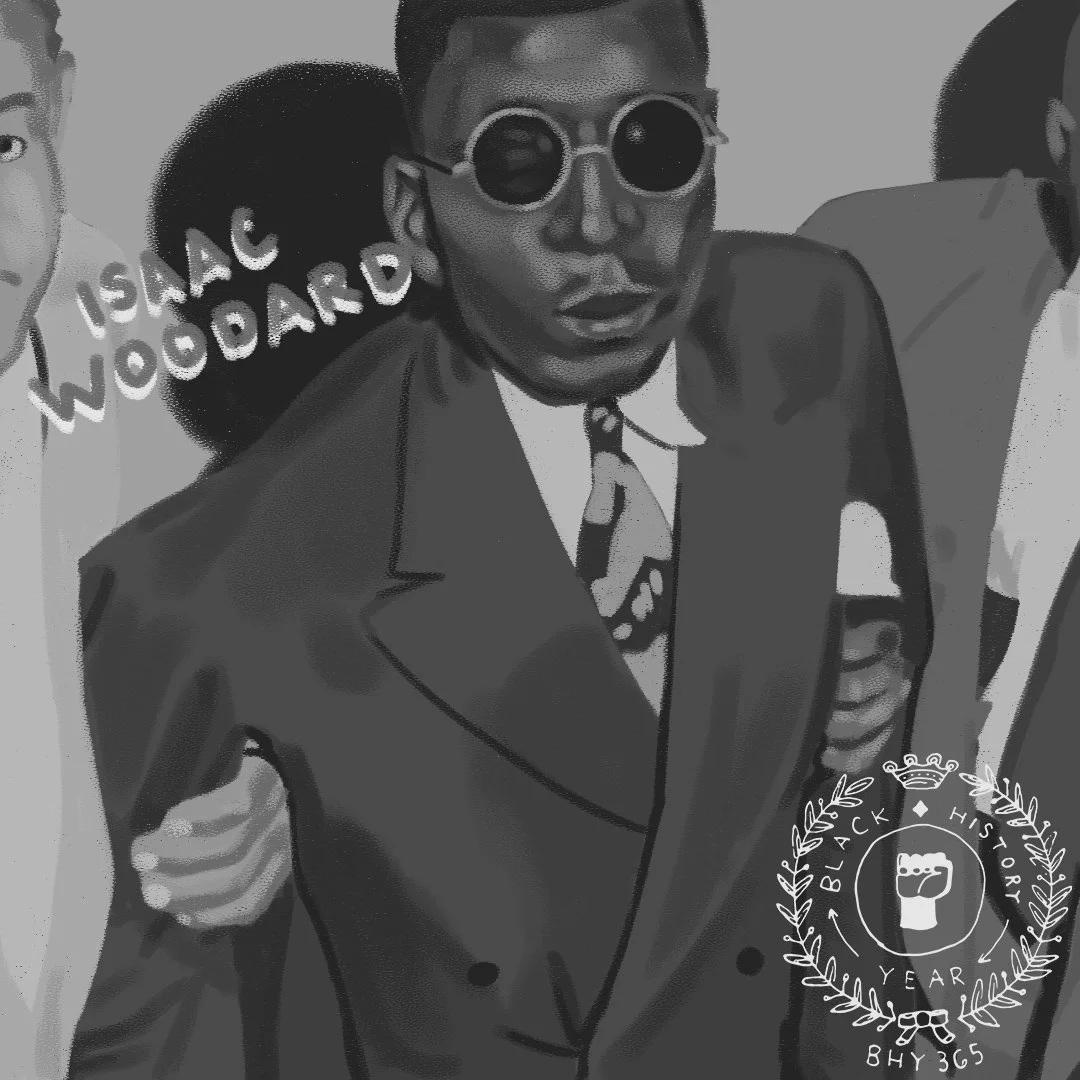
Black History 365 | # 286 Isaac Woodard
In 1946, Isaac Woodard, a Black army sergeant on his way home to South Carolina after serving in WWII, was pulled from a bus for arguing with the driver. The local chief of police savagely beat him, leaving him unconscious and permanently blind. The shocking incident made national headlines and, when the police chief was acquitted by an all-white jury, the blatant injustice would change the course of American history. Based on Richard Gergel’s book Unexampled Courage, the film details how the crime led to the racial awakening of President Harry Truman, who desegregated federal offices and the military two years later. The event also ultimately set the stage for the Supreme Court’s landmark 1954 Brown v. Board of Education decision, which finally outlawed segregation in public schools and jumpstarted the modern civil rights movement. Please be weary of the connection of black lives to social change. It seems as though as if its some sick, twisted currency that can be exchanged for a social reset. More recently it’s George Floyd…According to a McKinsey report released in December 2020 (and updated on the one-year anniversary of Floyd’s murder), more than 1,100 organizations committed a total of $200 billion to racial justice initiatives between June 2020 and May 2021. McKinsey’s analyses showed that nearly 90% of those pledges came from financial institutions. Tech companies also made grand announcements. For instance, Facebook CEO Mark Zuckerberg pledged $10 million to “groups working on racial justice,” which at the time was the company’s single-largest donation. Intel committed $7.6 million, Apple gave $100 million, and Google put up $370 million, to name a few…FOH. Bless the soul of Isaac Woodard.
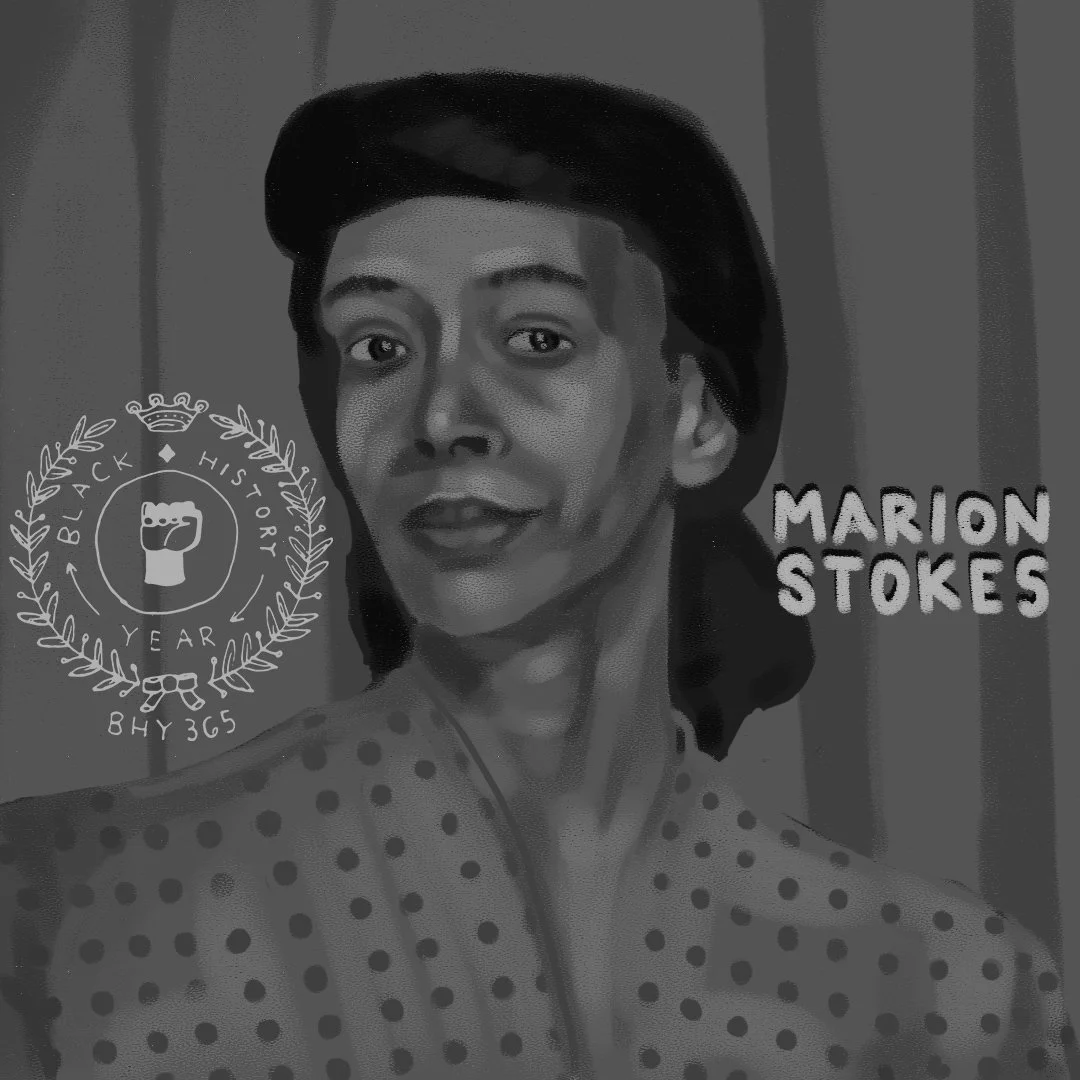
Black History 365 | # 285 Marion Stokes
This is Marion Marguerite Butler Stokes. Beginning in 1979, former librarian Marion Stokes recorded broadcasts from multiple televisions at once, 24 hours a day, eventually accumulating 71,000 tapes of television history. She believed that the news held crucial historical details at risk of disappearing forever. It started in 1979 with the Iranian Hostage Crisis at the dawn of the twenty-four hour news cycle. It ended on December 14, 2012 while the Sandy Hook massacre played on television as Marion passed away. Having been surveilled by the government for her early political activism––she and her first husband had attempted to defect to Cuba together –– Stokes was exceedingly cautious about her recordings while she was alive. Networks were disposing their archives for decades into the trashcan of history. Remarkably Marion saved it, and now the Internet Archive will digitize her tapes and will be made publicly available, offering everyone the opportunity to examine history. Rest in peace.
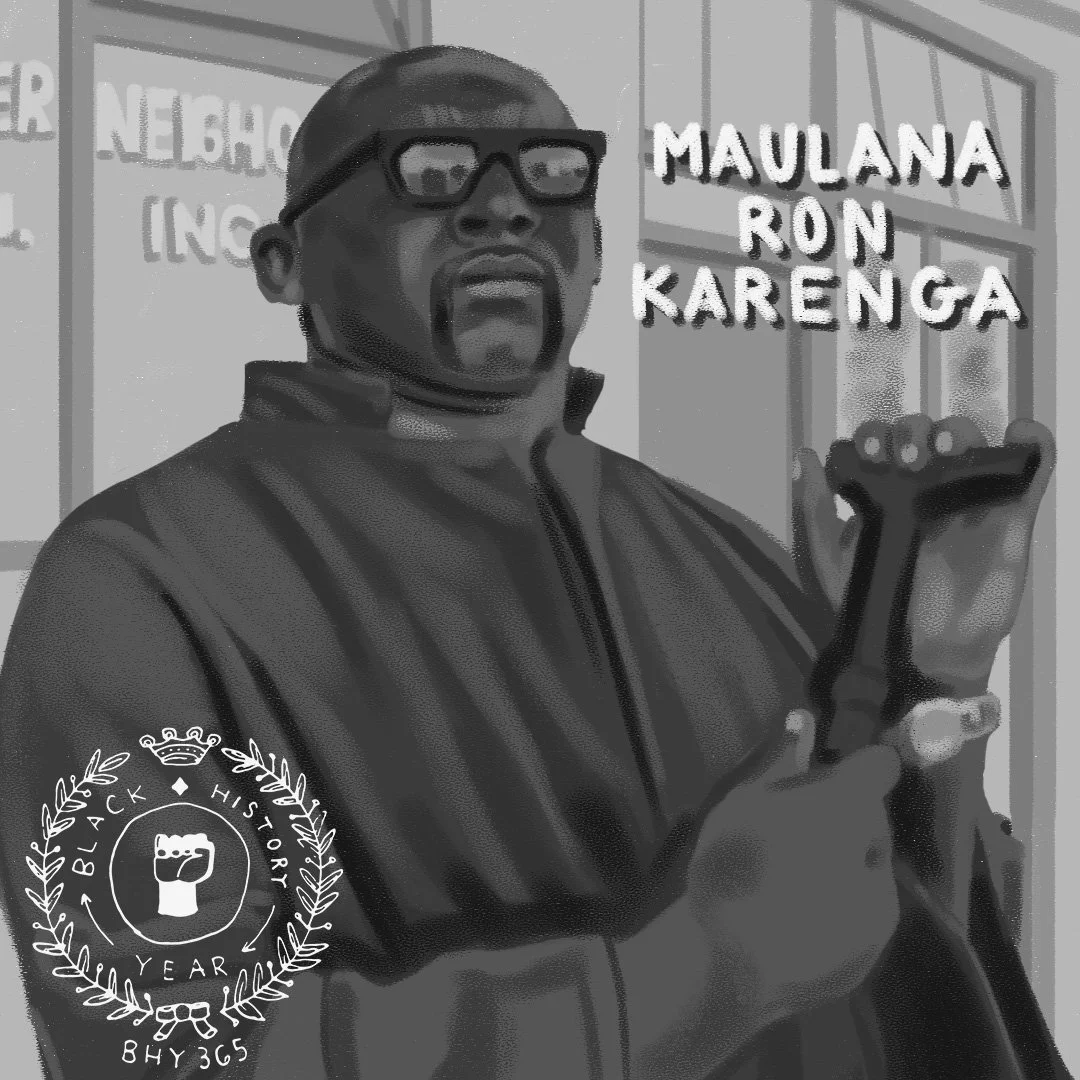
Black History 365 | # 284 Maulana Ron Karenga
Dr. Maulana Ron Karenga is an American activist, scholar, and author. He is best known as the creator of Kwanzaa. Dr. Karenga is the author of 17 books and monographs and 4 co-edited books; 57 journal articles; 42 book chapters; over 650 columns and commentaries on critical issues; and numerous encyclopedia entries. Born Ronald McKinley Everett in Parsonsburg, Maryland, he is the 14th child of a Baptist minister. He moved to California in the late 1950s to attend Los Angeles City College. He attended the University of California, Los Angeles (UCLA) as part of a federal program and received his Master's in political science and African studies. After meeting Malcolm X, Karenga began to embrace Black Nationalism, and after the Watts riots in 1965, he joined the Black Power movement. He changed his first name to "Maulana," Swahili for "master teacher.” Fly. Salute!
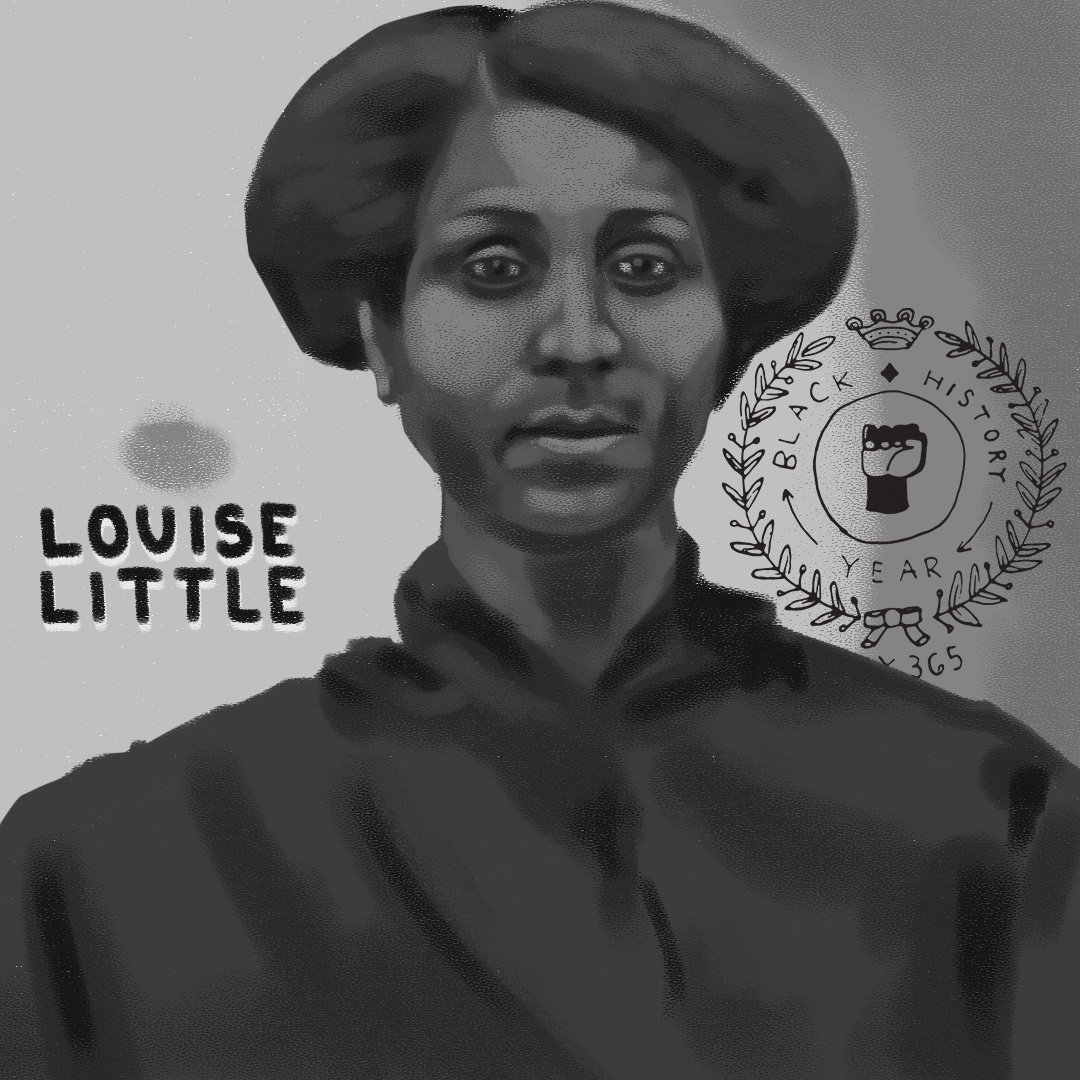
Black History 365 | # 283 Louise Little
Peace to Louise Little. May God watch over the Little’s for eternity. Little is known about Louise Little — she was put in a mental asylum and her children were left to the state. This was 14 years after her house was burned down by the KKK due to her and her husband’s activism. She was pregnant with Malcolm X at the time. She was widowed at the time of being put in the mental asylum and she remained there for 25 years. Louise and her husband, Earl, were unapologetic activists who pushed a message of revolution in the new Black communities of the unwelcoming Midwest. They were targeted by the KKK as a result. She had waged an eight-year battle against welfare workers, police and judges. Helen Louise Langdon was born on the Caribbean island of Grenada between 1894 and 1897. Her father was white, but it is unknown the nature of the relationship between the father and mother whether it was one of consent or not. Louise was a baby when her mother died, so she was raised by her grandmother Mary Jane Langdon and her aunt Gertrude. Mary Jane and her husband, Jupiter, who also died when Louise was small, were captured in West Africa when they were young but were freed by the British Navy sometime after 1833, when imperial Britain banned slavery. Louise studied at a local Anglican school, excelled in writing, spoke English, French and Creole and absorbed world history — however slanted a version — from the Royal Reader textbooks given to millions of children across the British Empire. Louise Little was immediately drawn to Marcus Garvey’s ethos of self-determination and Pan-African confraternity — as was Earl Little, a Baptist minister and recent immigrant who had escaped the violence of Jim Crow Georgia. The two married after meeting at a Garvey event. As the Little children began to attend school, Louise took on a new role: a prescient form of the activist parent. She worked to counter what the children were taught, correcting the routine slander about Black people to inoculate her children against self-hatred. Absolutely beautiful. Malcolm X is quoted as saying “…she was a most Faithful Servant of the Truth years ago. I praise Allah for her.”