

Audrey Smedley, one of the nation’s first African American women anthropologists, after completing her education in Detroit Public Schools, Audrey attended the University of Michigan on a scholarship. She intended to study law and dreamed of working for the United Nations. In 1954, Smedley earned a Bachelor of Arts degree in the history, letters, and law program and a Master of Arts in anthropology with a concentration in history in 1957 from the University of Michigan. From 1959 to 1961, she investigated the social and economic organization of the Birom ethnic group of Northern Nigeria to complete her dissertation in late 1966. Smedley is best known for her studies of the history of “race,” a concept that she argues emerged in the Americas to justify enslavement and genocide against Africans. She argued that folk culture popularized race while science gave it authority in her book Race in North America: Origin and Evolution of a Worldview (1993). She is the co-founder of the Museum of Afro-American History in Detroit (now the Charles H. Wright Museum of African-American History). Much respect to the pioneering social anthropologist who peacefully passed away at her home in Beltsville, Maryland, on October 14, 2020, 16 days before her ninetieth birthday. Thank you for your contributions. Rest in peace.

Black History 365 | # 155 Matthew Henson
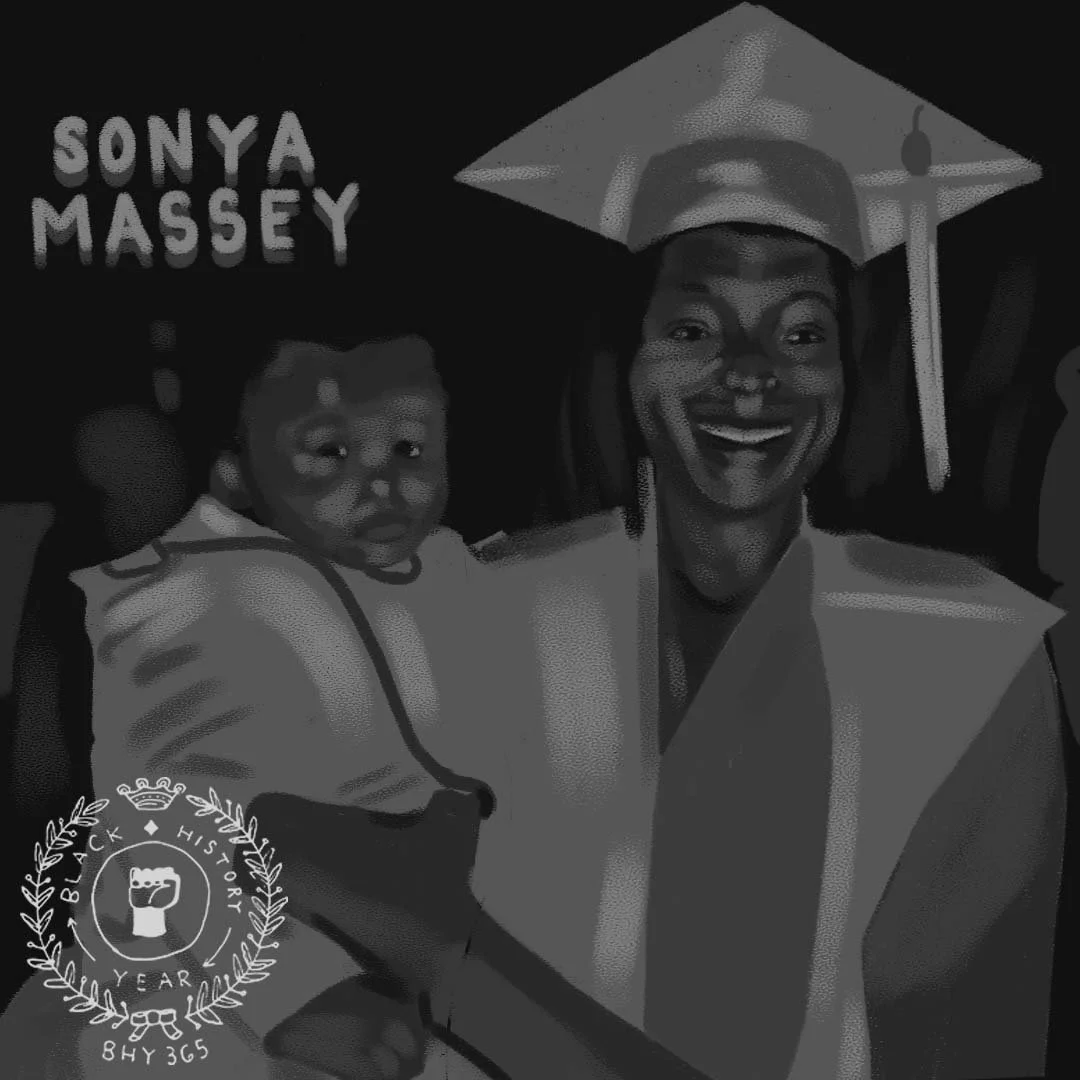
Black History 365 | # 151 Sonya Massey

Black History 365 | # 154 John Henrik Clarke
John Henrik Clarke is best known as the scholar who made Africana studies prominent in academia in the late 1960s. Arriving in Harlem at the age of 18 in 1933, Clarke developed as a writer and lecturer during the Great Depression years, becoming a part of the movement we now understand as the Harlem Renaissance. Clarke was co-founder of the Harlem Quarterly (1949–51), book review editor of the Negro History Bulletin (1948–52), associate editor of the magazine, Freedomways, and a feature writer for the Black-owned Pittsburgh Courier. Clarke taught at the New School for Social Research from 1956 to 1958. Traveling in West Africa in 1958–59, he met Kwame Nkrumah, whom he had mentored as a student in the US, and was offered a job working as a journalist for the Ghana Evening News. He also lectured at the University of Ghana and elsewhere in Africa, including in Nigeria at the University of Ibadan. His greatest period of influence resides in the 1960’s where he was a prominent intellectual during the Black Power Movement, advocating studies on the African-American experience and the place of Africans in world history. He challenged the views of academic historians and helped shift the way African history was studied and taught.

Black History 365 | # 153 Sistah Souljah
Sister Souljah (born Lisa Williamson) is an emcee, activist, and successful author who is best known for her books, most notably her memoir, No Disrespect (1994) and The Coldest Winter Ever (1999). Prior to her success as an author, she was a member of the legendary Hip Hop group, Public Enemy. In 1992, she released 360 Degrees of Power, her first and only album to date. Sister Souljah’s music addresses various issues facing the Black community such as racism, sexism, and abuse. Seeing her mind at work on Larry King, with Cornel West, to now where she’s discussing her pursuits in non-fiction is awe inspiring. She was also in Public Enemy. BIG UP!