
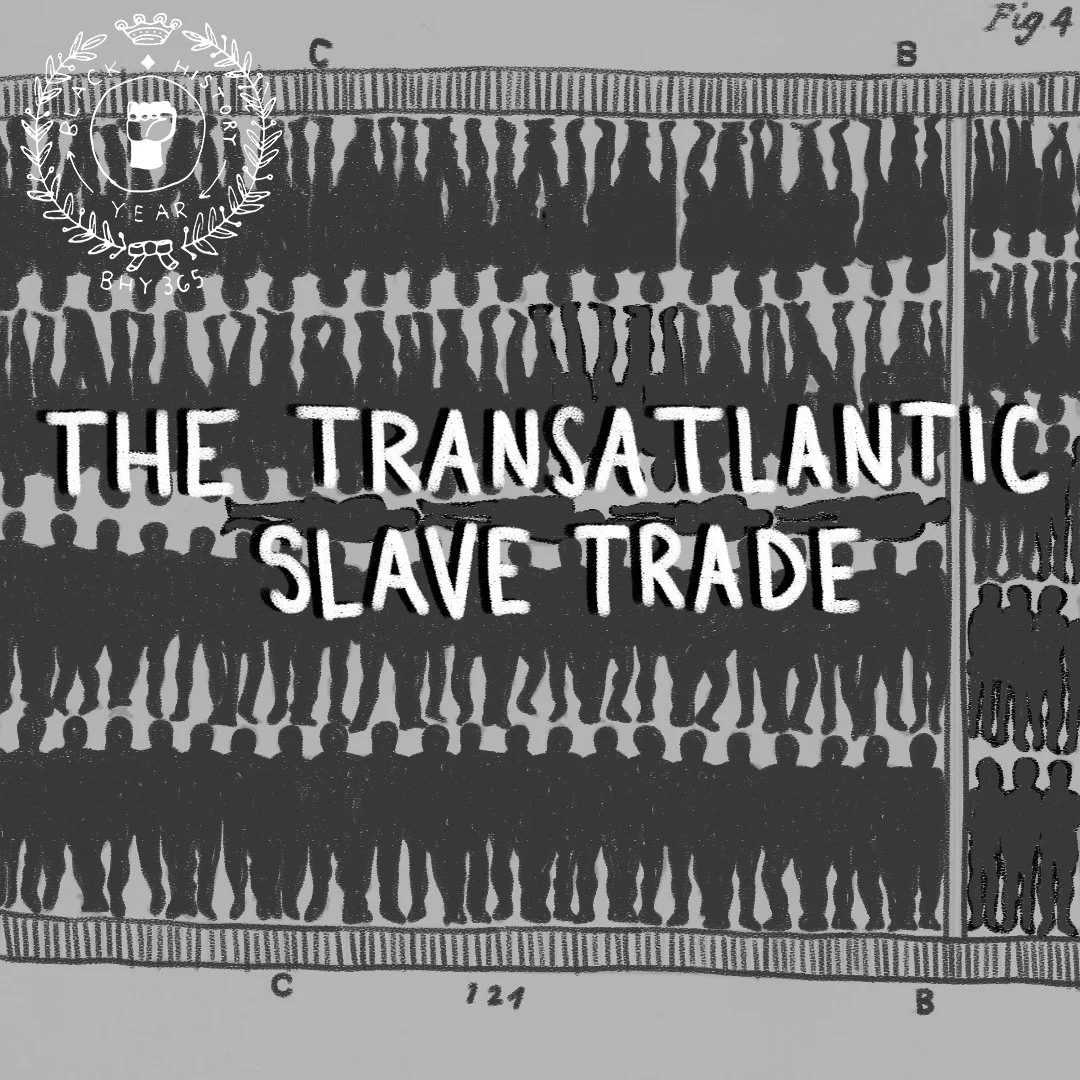
So check this out. The enslavement of people has been a part of human history for centuries. Slavery and human bondage has taken many forms, including enslaving people as prisoners of war or due to their beliefs, but the permanent, hereditary enslavement based on race later adopted in the U.S. was rare before the 15th century. Just recently, on March 25th, 2026 the UN General Assembly declared the transatlantic slave trade, “among the gravest violations of human rights in human history …” The European colonizers ain’t slouches. The most comprehensive shipping records compiled in the Trans-Atlantic Slave Trade Database indicate that approximately 12.5 million Africans were put on these voyages between 1525 and 1866. 10.7 million survived the dreaded Middle Passage, disembarking in North America, the Caribbean and South America. And about 388,000 Africans were shipped directly to North America. The lower deck of a slave ship was divided into separate compartments for men and women, with the men shackled together in pairs and the women left unchained but confined below. The conditions were appalling, with hundreds of people crowded together with little airflow and even less sanitation. Captive Africans suffered from diseases such as dysentery and smallpox, depression and outright despair, the cruelty of captain and crew, and sexual exploitation. As a result, mortality rates averaged above 20 percent for captive Africans in the first decades of the slave trade and about 10 percent by 1800. The possibility of mutiny or revolt resulted in a heavy hand with discipline. Crew and captive cargo were routinely whipped and more extreme forms of violence, including thumbscrews, were used to discipline the Africans. Despite this, Africans did resist. Some committed suicide by jumping overboard or refused to eat, while others organized insurrections, although due to the overwhelming weaponry brought to bear by the crew, few attempts at revolt succeeded. I paraphrase historian Ishakamusa Barashango "Understand that, regardless of the lofty ideas engraved on paper in such documents as the Constitution or Declaration The basic nature of the European American white man remains virtually unchanged" Look around, what do you see?