
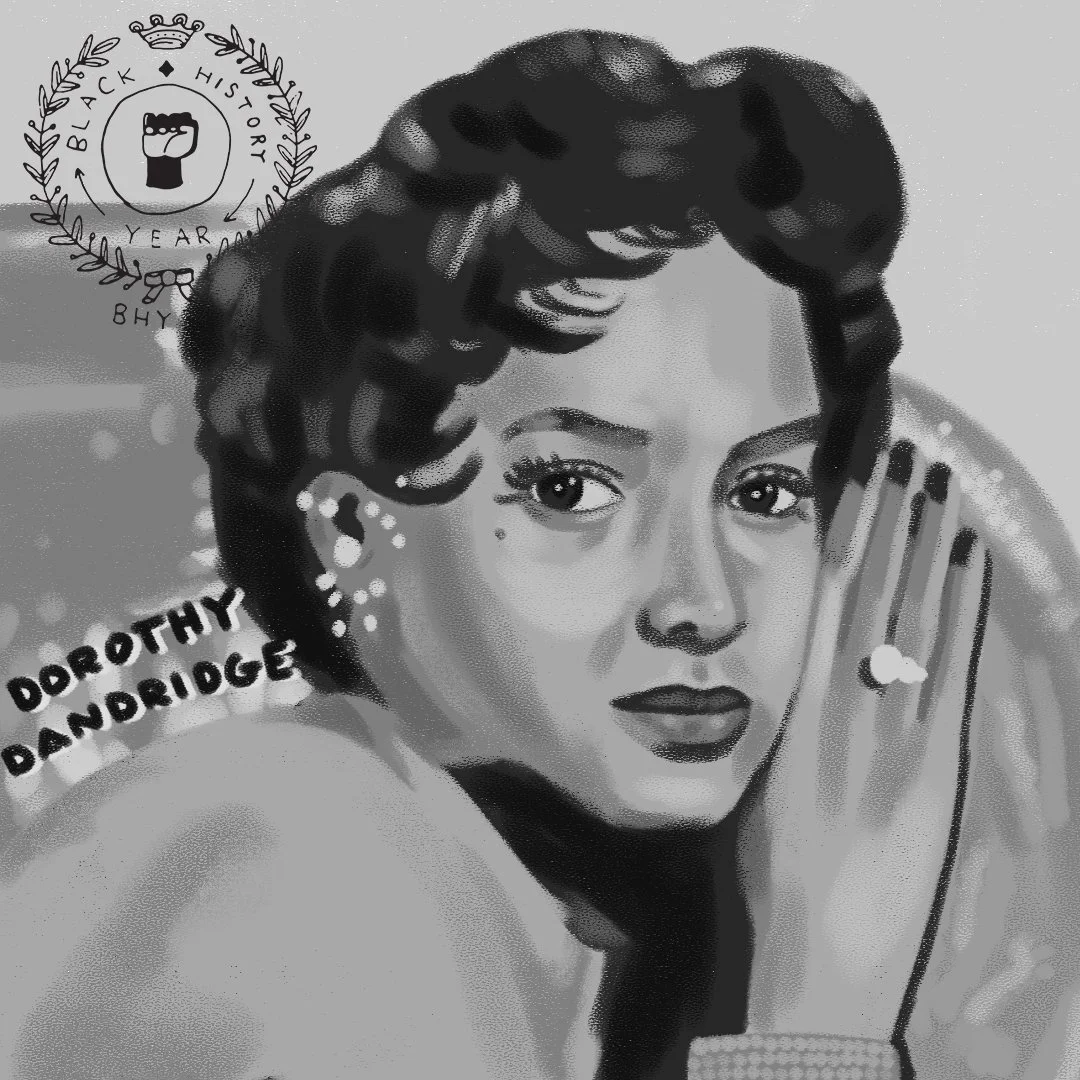
Shoutout to Dorothy Dandridge. She became the first Black woman to be nominated for an Academy Award for best actress. Dandridge’s mother was an entertainer and comedic actress who, after settling in Los Angeles, had some success in radio and, later, television. The young Dorothy and her sister Vivian began performing publicly as children and in the 1930s joined a third (unrelated) girl as the Dandridge Sisters, singing and dancing. In the 1940s and early ’50s Dorothy secured a few bit roles in films and developed a highly successful career as a solo nightclub singer, eventually appearing in such popular clubs as the Waldorf Astoria’s Empire Room in New York City. In 1954, Dorothy played the much coveted role of Carmen Jones, starring opposite of Harry Belafonte This movie brought her fame and recognition. This is when she received an Academy Award nomination for her role in the film. She was the first black woman in history to receive the honor of being nominated in the category of Best Actress. Dandridge eventually lost the award to Grace Kelly (The Country Girl). Still, after the phenomenal success of Carmen Jones, Dandridge seemed well on her way to becoming the first non-white actress to achieve the kind of superstardom that had accrued to contemporaries like Marilyn Monroe and Ava Gardner. In 1955, she was featured on the cover of Life magazine, and was treated like visiting royalty at that year’s Cannes Film Festival. In the 1960s Dandridge’s life and career were wracked by divorce, personal bankruptcy, and the absence of offers of work. At age 42 she was found dead in her West Hollywood apartment, either a suicide or a victim of an accidental drug overdose. Dandridge had began drinking heavily and taking antidepressants as opportunities started to wane. The threat of bankruptcy and nagging problems with the IRS forced her to resume her nightclub career, but she found only a fraction of her former success. Relegated to second-rate lounges and stage productions, Dandridge's financial situation grew worse and worse. By 1963, she could no longer afford to pay for her daughter's 24-hour medical care, and Harolyn was placed in a state institution. Dandridge soon suffered a nervous breakdown. Like most Hollywood stars, Dorothy’s star shone too brief, respect to her legacy on the silver screen.

Black History 365 | # 256 Bert Williams
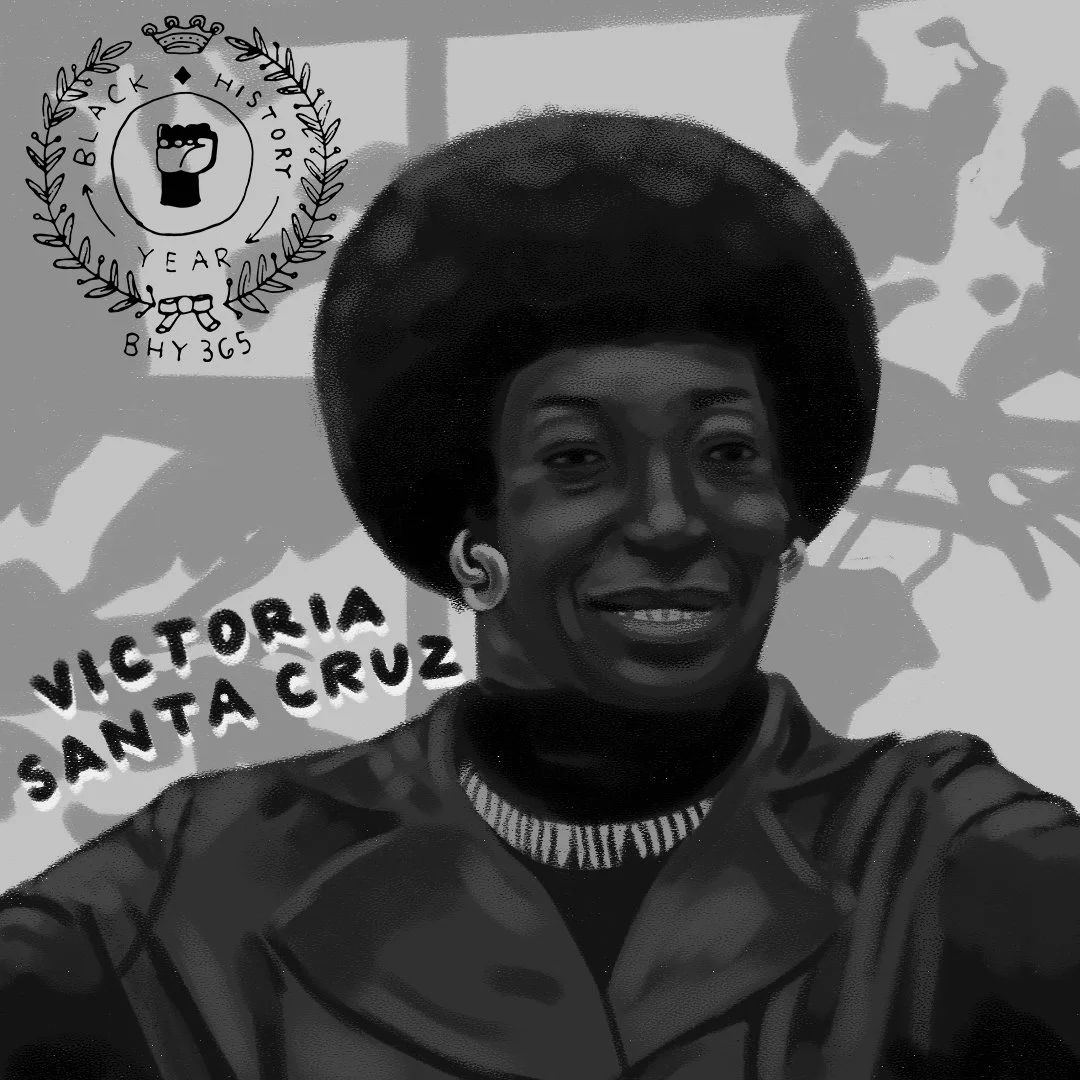
Black History 365 | # 255 Victoria Santa Cruz
In Latin America, the construction of race is varied and has, throughout history, undergone significant changes. During the colonial period, racial identities were ruled by an elaborate caste or casta system that determined what position in the social hierarchy citizens occupied. The system was one of the many ways that Spanish and Portuguese colonizers held onto their power and maintained superiority. The system remains unofficially in place despite the passage of time since the official end of colonization. Afro-descendant and Indigenous people make up 40% of the population in Latin America, yet they are often placed at the margins of society, with the region embracing a White-European visual representation that does not accurately depict the ethnic and racial makeup. This has resulted in the erasure of Afro-Latina contributions to various Latin American cultures. Many activists, artists, musicians, and entertainers have sought to reinscribe these ignored histories. Among these cultural workers was choreographer, composer, and activist Victoria Santa Cruz. Victoria Santa Cruz (Victoria Eugenia Santa Cruz Gamarra) is widely considered the mother of Afro-Peruvian dance. Born in Lima, Peru, on October 27, 1922, she was the eighth of ten children. Her father was Nicomedes Santa Cruz Aparicio, and her mother, Victoria Gamarra Ramirez. Her father worked as a playwright and her mother was an accomplished singer and dancer of traditional Peruvian styles. After an artistic career lasting 53 years, Victoria Santa Cruz died in Lima, Peru on August 30, 2014. Her legacy and impact on the culture continues to be celebrated. In October 2021, Peru’s Ministry of Culture launched the Victoria Santa Cruz Centennial with programs and activities. In addition, the Fulbright Commission in Peru launched the Victoria Santa Cruz Fulbright Grant to Afro-Peruvians perusing graduate study in the United States. Thank you for your contributions.
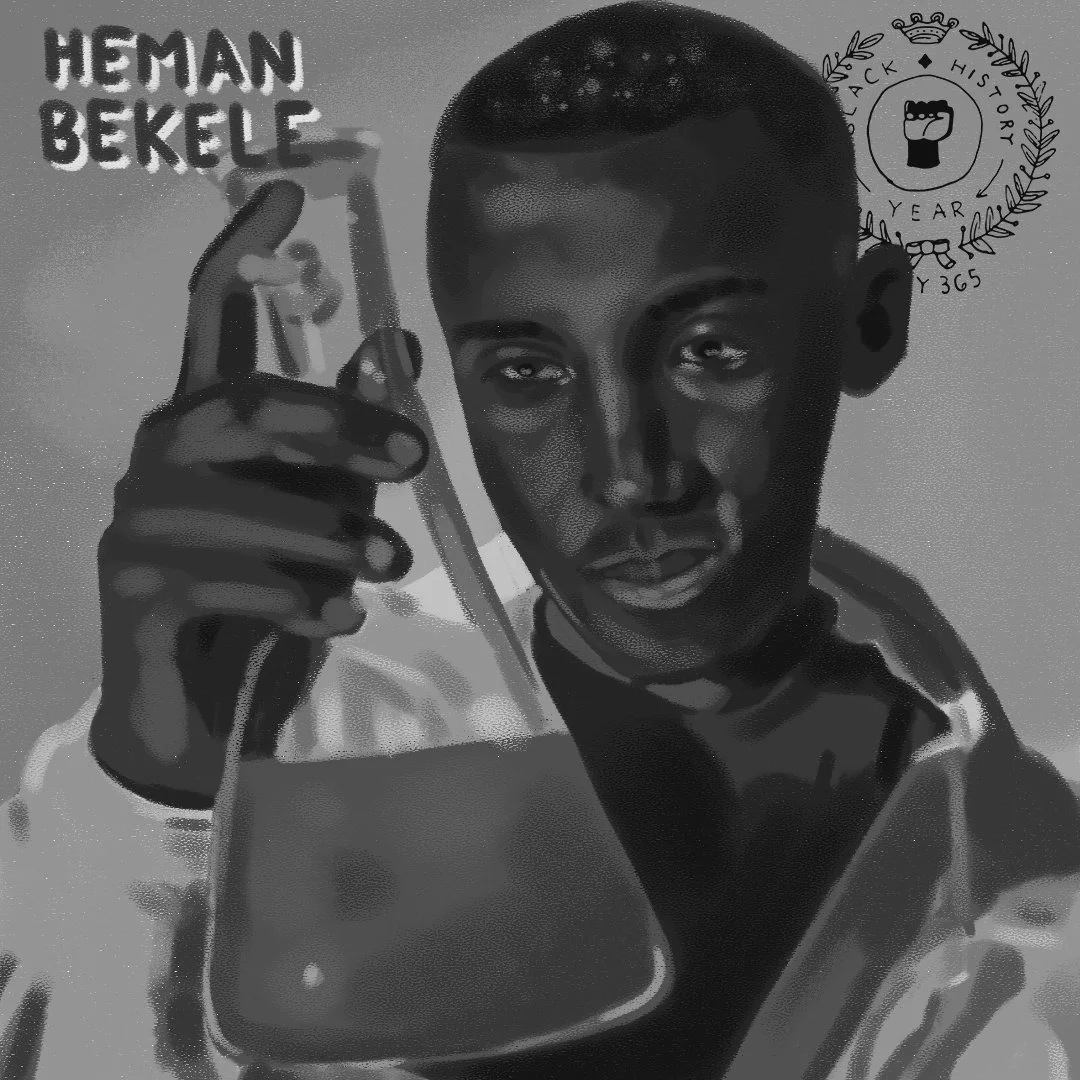
Black History 365 | # 254 Heman Bekele
Heman Bekele was Time Magazine’s Kid of the Year in 2024. Born in Addis Ababa before emigrating to the U.S. with his family when he was 4, Heman recalls that some of his earliest memories were of seeing laborers working in the blistering sun, usually with no protection for their skin. His parents taught him and his sisters—Hasset, now 16, and Liya, now 7—to cover up, and explained the dangers of too much time outdoors without sunscreen or proper clothing. This led to his experiment. His goal is to create a soap that could treat skin cancer, and to make it affordable for everyone who needs it. His work won him the grand prize in the 3M Young Scientist's Challenge, a competition that encourages kids to think of unique ways to solve everyday problems. He’s quoted as saying: “I've always been really passionate about science and how things work. Then, slowly, as I grew up, that curiosity started to develop into something more. Growing up in Ethiopia, I always thought people were always getting hit by the hot sun working outside. I didn't think much of it when I was really little, but as I grew up I realized how big of an issue [skin cancer] really is. Not only in Ethiopia but everywhere around the world. And when [people] do end up getting skin cancer, it's crazy expensive [to treat] and not affordable in the slightest. Skin cancer does have cures and skin cancer is treatable in most cases. However, the average price of skin cancer treatment globally is almost $40,000. When I heard those really shocking statistics it really inspired me to create a more affordable and accessible solution. I started doing experiments and working on different things, then that turned into my bar of soap as a project.” RIGHT ON! PEACE KING!

Black History 365 | # 253 Beverly Buchanan
Get familiar with Beverly Buchanan. In 1971, Buchanan enrolled at the Art Students’ League, where she studied with Harlem Renaissance painter Norman Lewis. From that time on, Buchanan devoted her time to making art. In the 1970s, she considered herself an abstract expressionist painter and completed a series of “Wall” paintings which were exhibited at the Montclair Art Museum in New Jersey in 1976. She held degrees in parasitology, public health, and medical technology. In the early 1970s, while a health educator, she declined acceptance to medical school to become an artist. Buchanan acknowledged that it was a difficult choice, but she desired to “express the images, stories, and architecture of her African American childhood.” In 1981, Buchanan strategically placed her Georgia land work Marsh Ruins near the site of the 1891 mob lynching of Wesley Lewis and Henry Jackson and overlooking St. Simons Island, where a group of Igbo people sold into slavery drowned themselves in 1803. This work addresses the soiled history of the South while memorializing victims of racism. Buchanan earned a BA from Bennett College, and an MS and MPH from Columbia University. She is the recipient of awards such as the John Simmon Guggenheim Memorial Foundation Fellowship (1980); the National Endowment for the Arts Fellowship (1994); and the Anonymous Was A Woman Award (2002). The Studio Museum has presented her work in exhibitions including Ritual and Myth: A Survey of African American Art (1982); The Decade Show: Frameworks of Identity in the 1980s(1990); and When the Stars Begin to Fall: Imagination and the American South (2014). She died 2015 in Ann Arbor, MI, rest in peace & respect to her legacy.