

Peace to Pauli Murray, she was quite the pioneer. A lawyer, activist, scholar and priest. Pauli Murray was first in her class at Howard University Law school and the only woman. She is the first African American to earn a J.S.D. from Yale Law School and a co-founder of the National Organization for Women. She wore many hats and according to The Pauli Murray Center, she didn’t conform to biological sex. “Throughout the 1930s, Murray actively questioned his gender and sex. He repeatedly asked physicians for hormone therapy and exploratory surgery to investigate his reproductive organs, but he was denied gender-affirming medical care.” In 1965, Pauli became the first African-American to receive a JSD degree from Yale Law School. Murray’s accomplishments are abundant and extraordinary. Not only was Murray one of the first black women to practice law, in 1977, she became the first black female ordained priest in The Episcopal Church. Moreover, she was a close friend of Eleanor Roosevelt and advisor to presidents Franklin Roosevelt and John F. Kennedy. In all regards, Pauli Murray was highly impressive and clearly ahead of her time. In fact, she was so ahead of her time that her importance often goes unrecognized and excluded from the popular narrative of the Civil Rights Movement. Salute!

Black History 365 | # 276 Jack Patterson
Meet Jack S. Patterson. In 1945, he became the first African-American hired by the Wisconsin Electic Railway and Transport Company (now known as MCTS). What an honor for them to be on the right(ish) side of history. Shoutout to Mr. Patterson and several others who were pioneers for this time, they really added true value to these companies. After working as a bus operator for 30 years he went on to train new bus operators for the next three years. He retired at age 65 in 1978. Salute!
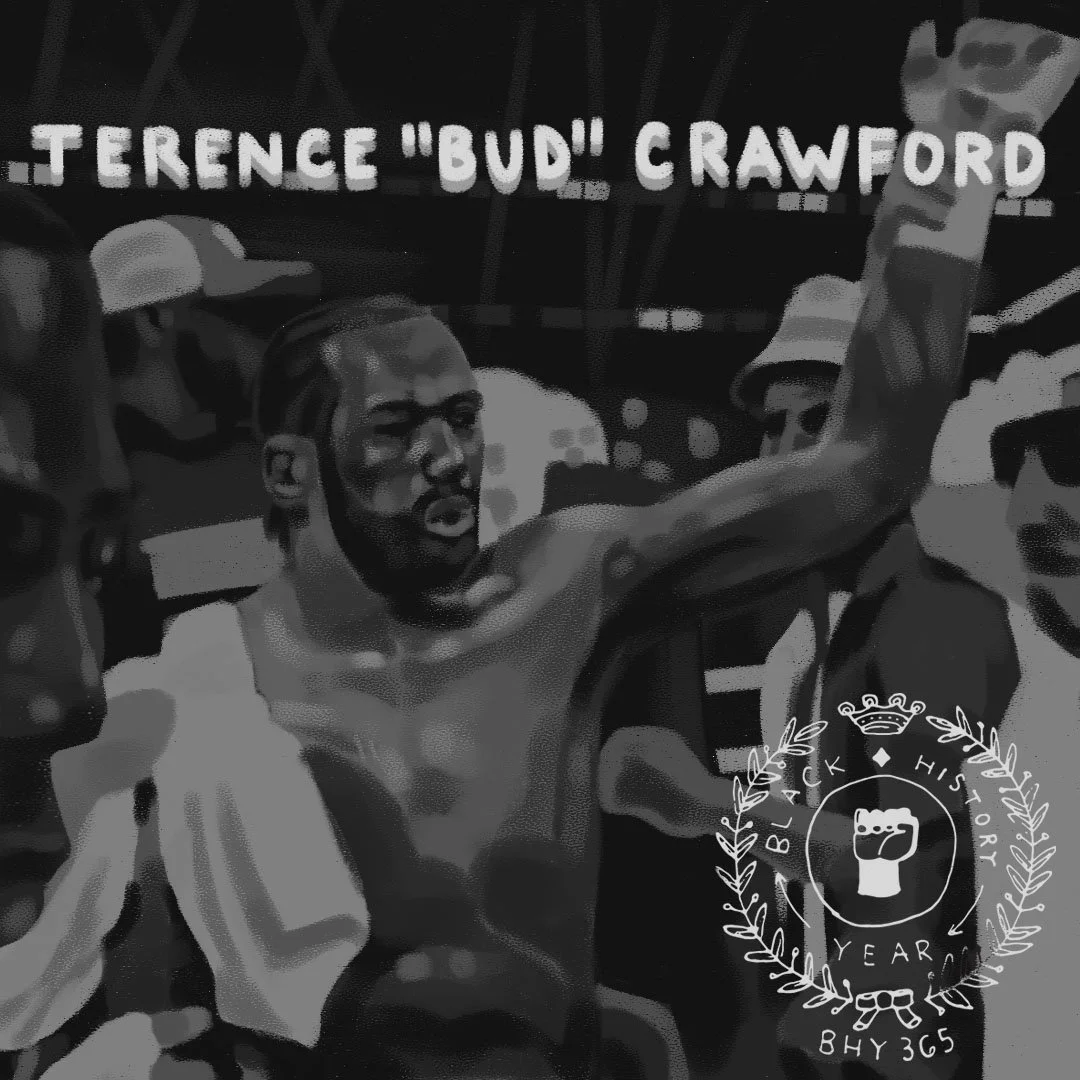
Black History 365 | # 275 Terence "Bud" Crawford
The utmost respect is needed on Bud’s name. Salute to the legend! Crawford now is the unified super middleweight champion. He became the first male boxer to capture three unified division titles when he defeated Alvarez by unanimous decision. Crawford, who moved up two weight classes, went down to a knee even before the decision was announced and then wept after he was named the winner. Crawford was quoted as saying, “I was stronger. I punched harder…I felt like I was in control,” Crawford said. “I think he was trying to figure me out.” He couldn’t crack the code. Congrats to Terence Crawford.

Black History 365 | # 274 The Sears Catalogue & Jim Crow
Shoutout to Sears being on the mostly right side of history. There have been circulating stories about how Sears was revolutionary during the Jim Crow era. Now, be that as it may, we understand that the Sears company itself is not a revolutionary company nor has that been its business model. It’s a mail-order business — a retailer of general merchandise, tools, home appliances, clothing, and automotive parts and services. In fact, when shopkeepers resisted Sears’ entertaining all paying customers, they convinced their customers to burn the catalogs in public squares, and offered prizes for the most catalogs destroyed. Part of the resistance was economic, pushing back against the catalog’s threat to local businesses, but the racism of Jim Crow was also at work. In an attempt to discourage whites from using the catalog, shopkeepers told them that Sears was a black company, and that was why it sold by mail — to hide its black face. In response, Richard Sears and Alvah Roebuck, the company’s founders, published photos to “prove” they were white. They were not anti-racist crusaders. Sears is not your savior. But, shoutout to them for appreciating the black dollar. That’s dope.
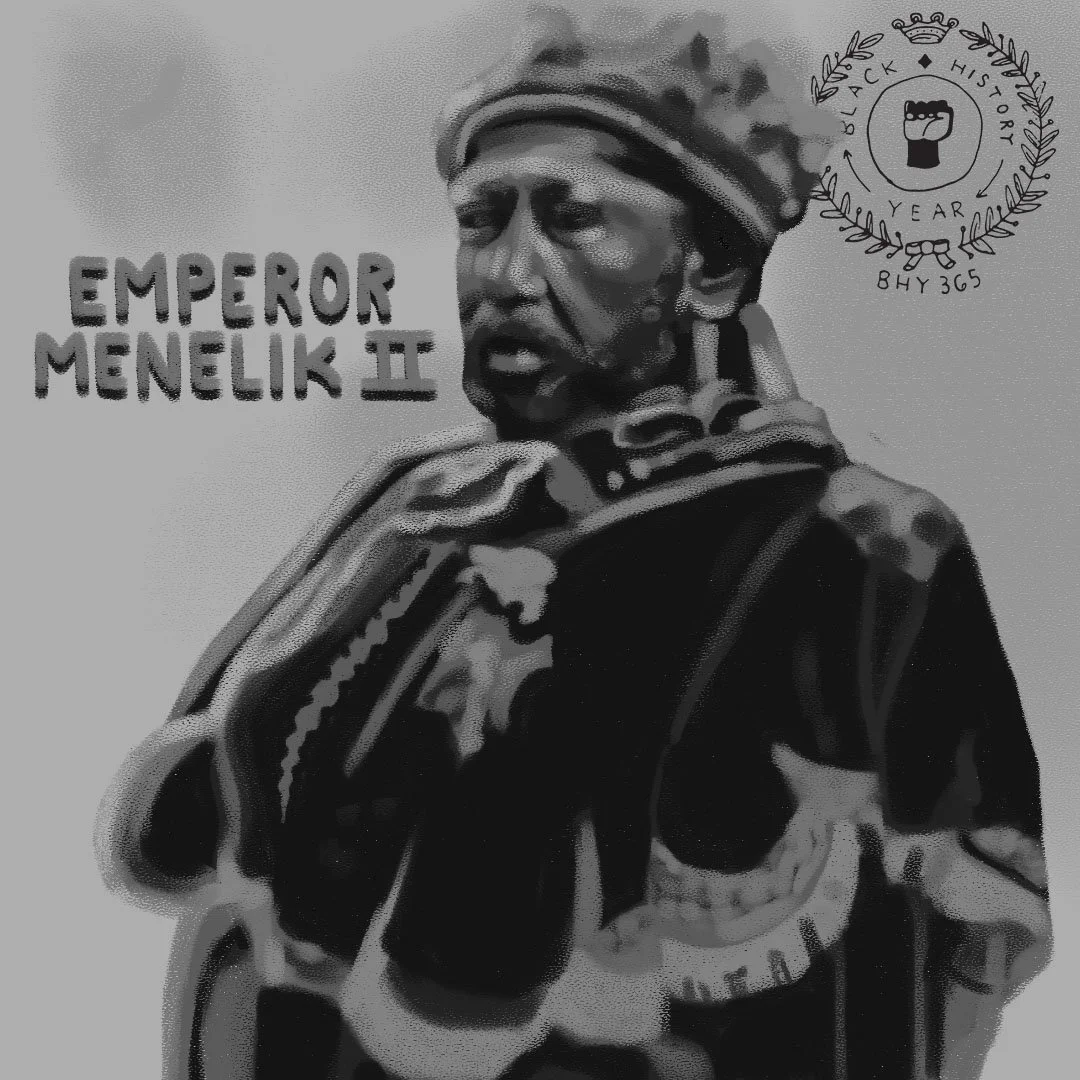
Black History 365 | 273 Emperor Menelik II
Ethiopia’s history is so rich. We usually hear about the benevolent ruler Haile Selassie, upon further digging you’ll find his legacy is a little more nuanced than that. However, Emperor Menelik II is someone we should know about just as much if not more than the popular Haile Selassie. In 1896, Ethiopia fended off an invading Italian army and secured its independence — Menelik and his wife, Taytu Betul, a shrewd opponent of European expansionism, prepared to defend their sovereignty. In addition to securing modern weapons, they launched a public relations campaign with the help of several Europeans sympathetic to their cause. With the Italians presenting a common threat, Menelik united the country’s fractious provincial rulers behind him. When he called for a mass mobilization in September 1895, he was able to raise around 80,000 to 120,000 troops, with men pouring in from almost all of Ethiopia’s regions and ethnic groups, this was obviously after his rise to power. His rise included a path of destruction of rival Ethiopians, their mosques, and pillaging of their towns. By March 1st the end of day Italian troops were in full retreat, leaving behind their artillery and roughly 3,000 prisoners. Overall, the Ethiopians inflicted a casualty rate of up to 70 percent (while also suffering relatively heavy losses). They brought the Italian prisoners back to Addis Ababa, in what Jonas calls a “racial turning of the tables that put whites at the mercy of blacks in significant numbers for the first time.” Treated well, they were gradually released, whereas, in contrast, the Africans fighting alongside the Italians purportedly had their right hands and left feet amputated. Italy’s ruler was trialed…and acquitted, their government collapsed, but under Mussolini, they later returned to occupy Ethiopia through more warfare. We know war is hell. Despite racism they learned the hard way to take “African’s much more seriously.” Emperor Menelik’s rule is said to have inspired the concept of Wakanda. War aside, his reign, which began after the death of Yohannes IV, was marked by significant territorial expansion and modernization efforts, including the establishment of Addis Ababa as a new capital. He implemented economic and diplomatic strategies that fostered a unique cultural identity within Ethiopia, promoting religious tolerance and integrating diverse regions into a cohesive empire. Menelik II's legacy remains influential in shaping Ethiopia's identity and governance. BIG UP!