
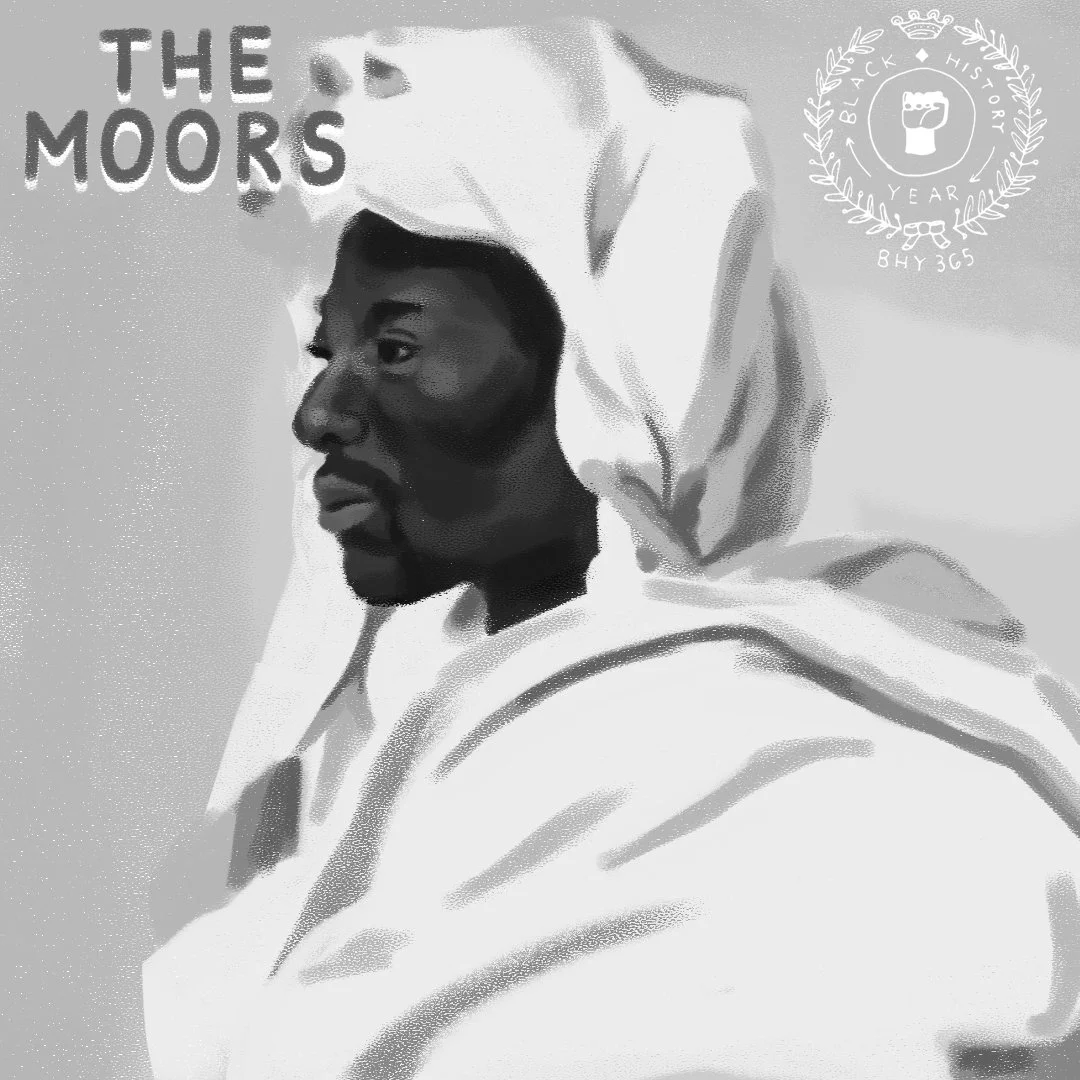
Who are The Moors? Their identity and history could be divided into two parts — African Moors and Arab Moors. Moors is a very broad term. You may notice a pattern of confusion, a labyrinth-like search to find black history that would be attributed to black people who are phenotypically Black/African. You should know by now, that this is by design. The Moors, again were the indigenous people of North Africa who civilized Europe. Yes, influencing architecture, philosophy, governance systems, agricultural innovations turning Iberia (modern day Spain and Portugal) into the most sophisticated territory in Europe. From 711 to 1492. Try to imagine what you think indigenous people from Africa would look like. European’s are not slouches. The history of who the indigenous people are versus who they became as a result of Arab Conquest and eventual European involvement and mass mixing is where plain, simple readable, cut and dry chronological timeline is inconclusive and hard to understand. Fortunately it is easy to overstand this; history books have a repeated history of either leaving out positive, influential Black/African history (that is not under the shadow of transatlantic slave trade) or just muddying and confusing it. This here is no different. African Moors were called Berbers as a derogatory term, meaning barbarian, but they themselves identified as Amazigh people. Which translates to “free people” or “noble men.” The title Moors is an exonym. Meaning the name given to, from outside. You’ll find from the massive information service EBSCO, that “The Moors are primarily North African Arabs and Berbers who invaded the Iberian Peninsula…leading to a complex history of conquest, coexistence, and conflict. Their reign, known as Al-Andalus, was characterized by remarkable advancements in architecture, science, and culture…” Diversity exists under The Moors umbrella, but which group under that umbrella-term got Europe out of its dark ages?