

If you don’t know Cathay Williams, that’s probably by design. She is a true bad*ss. One of over 400 hundred women to serve in the Civil War posing as male soldiers. Williams was the first African American woman to enlist and the only documented woman to serve in the United States Army, while disguised as a man, during the Indian Wars. Despite the prohibition against women serving in the military, Williams enlisted in the U.S. Regular Army under the false name of "William Cathay" on November 15, 1866. She enlisted for a three-year engagement, passing herself off as a man. Williams was assigned to the 38th U.S. Infantry Regiment after she passed the cursory medical examination. Though this exam should have outed her as a woman, the Army did not require full medical exams at this time. Due to contracting smallpox she was frequently hospitalized, the post surgeon discovered she was a woman and informed the post commander. She was honorably discharged by her commanding officer, Captain Charles E. Clarke on October 14, 1868. Though her disability discharge meant the end of her tenure with the Army. She signed up with an emerging all-black regiment that would eventually become part of the legendary Buffalo Soldiers. Her life and military service narrative was published in the St. Louis Daily Times on January 2, 1876. Around 1889 or 1890, Williams entered a local hospital and applied for a disability pension based on her military service. Though there was a precedent for granting pension to female soldiers, (Deborah Sampson, Anna Maria Lane and Molly Williams disguised themselves as men in the Revolutionary War), Williams request was denied. In September 1893, a doctor examined Williams. She suffered from neuralgia and diabetes, and had all her toes amputated and walked with a crutch. The doctor decided that she did not qualify for disability payments.The exact date of her death is unknown, but it is believed she died shortly after she was denied. Woy.

Black History 365 | # 215 Martin Delany

Black History 365 | # 214 Ronald E. McNair

Black History 365 | # 213 Zeb Powell
Zeb Powell is too cold widdit, pun intended. Not to mention, he is the first black snowboarder to win a gold medal at the X Games in 2020. Residing from North Carolina, he developed a love for snowboarding through skateboarding. Once the skatepark shut down he leaned into snowboarding seasonally at a place called Catalucci. The rest is history. Zeb Powell is the most creative snowboarder ever. He credits it to his ADD. Highly advise that you watch him in action. Truly art in motion. The attention from his X Games victory put a spotlight on how few Black athletes are represented in professional snowboarding, and it lit a fire inside him to start initiatives like the Slide-In Tour and Culture Shifters to help change the face of the sport. It's working, fast. PEACE! @zebpowelll
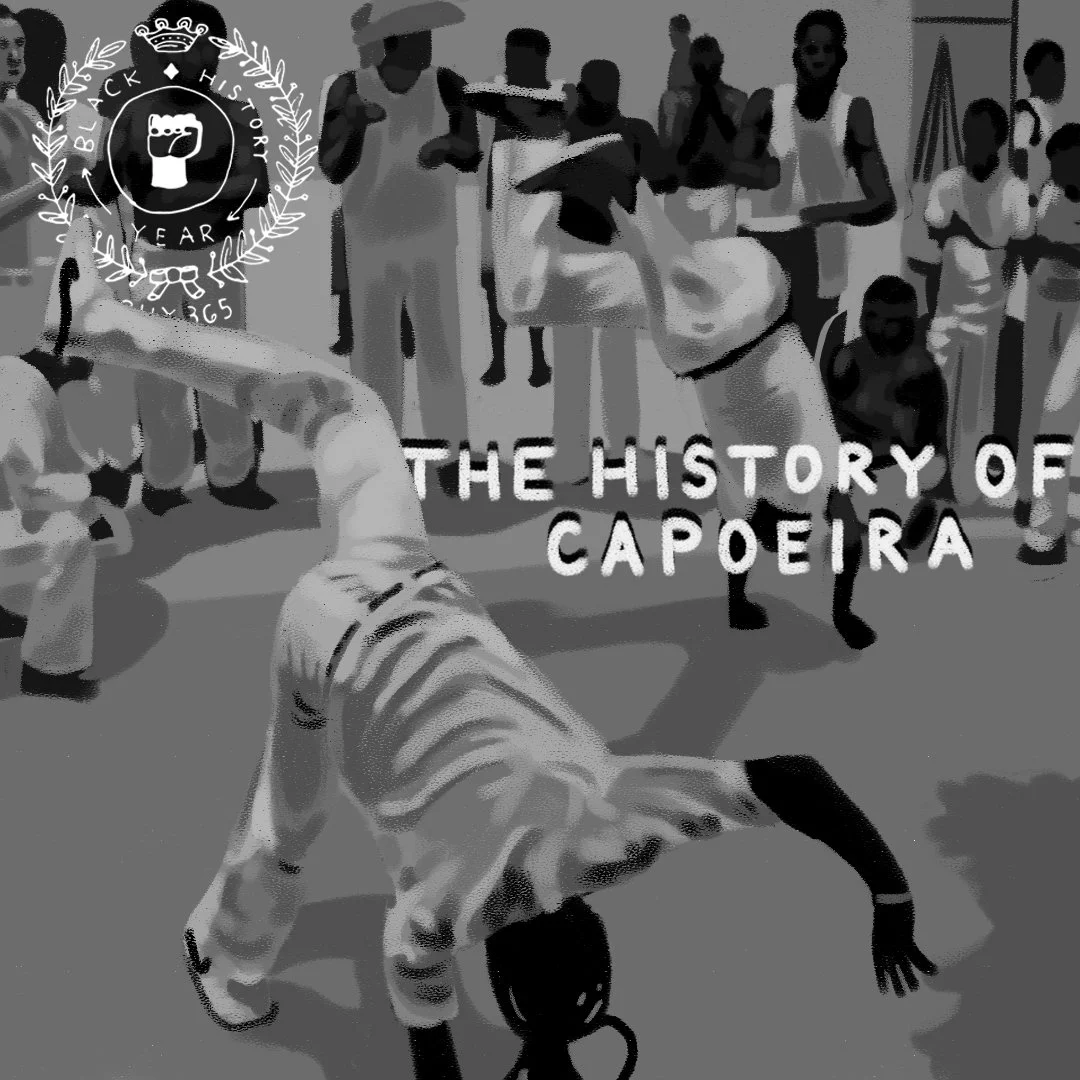
Black History 365 | # 212 The History of Capoeira
Capoeira developed as a result of more than three hundred years of slavery in Brazil. Enslaved Africans were taken by Portuguese colonists from various cultures in Africa. In Brazil, generations of enslaved African people shared the cultural customs, dances, rituals, and fighting techniques that would combine to become capoeira. Slaves used capoeira to fight to escape and resist capture, but concealed its combative purpose through music, song, and dance. Fueled by the burning desire for freedom. It soon became widely practiced on the plantations as a means of breaking the bonds of slavery, both physically and mentally. During this time, the art was considered a social infirmity and officially prohibited by the Brazilian Penal Code. Between 1500 and 1815, Brazil was a colony of the Portuguese Crown—an empire sustained by slave labor. The enslaved resisted in various forms: armed revolt, poisoning their owners, abortion and escape. The vastness of the Brazilian inlands made it possible for individuals on the run to hide. Some escaped and formed clandestine communities in the backlands of the rainforest, independent villages known as quilombos. Here, the Africans and their descendants developed an autonomous socio-cultural system in which they could sustain various expressions of African culture. The basic aesthetic elements of capoeira were brought to Brazil by enslaved people, primarily from west and west-central Africa. These elements were recombined and reinterpreted within the diverse enslaved community of Brazil to create a unique means of self defense, both driven and disguised—as merely a dance—by its musical accompaniment. Slavery was abolished in Brazil in 1888, but capoeira continued to flourish within the Afro-Brazilian population, particularly in the northeastern state of Bahia. The government, however, recognizing the physical and spiritual potency of the art form and considering it a threat to society, continued to outlaw the practice until the early 20th century. Real hater sh*t right there.