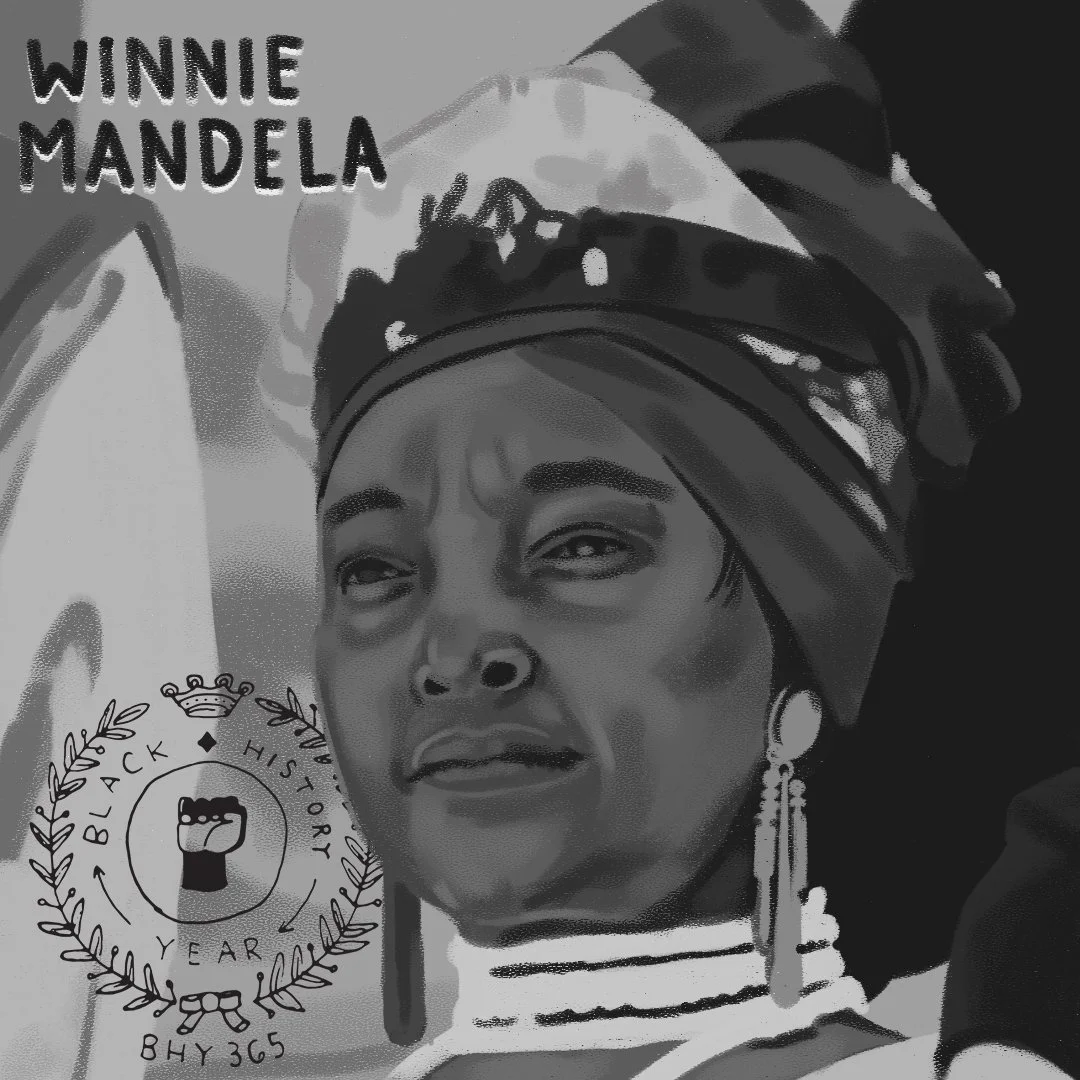
Winnie Madikizela-Mandela (born September 26, 1936, Bizana, Pondoland district, Transkei [now in Eastern Cape], South Africa—died April 2, 2018, Johannesburg, South Africa) was a South African social worker and activist considered by many Black South Africans to be the “Mother of the Nation.” She was the second wife of Nelson Mandela, from whom she separated in 1992. While Nelson Mandela was in jail she held it down, remained militant, and became somewhat of a symbol for anti-apartheid while Nelson Mandela was still jailed. At the start of her husband’s long imprisonment (1962–90), Madikizela-Mandela was banned (severely restricted in travel, association, and speech) and for years underwent almost continual harassment by the South African government and its security forces; she spent 17 months in jail in 1969–70 and lived in internal exile from 1977 to 1985. During these years she did social and educational work and became a heroine of the anti-apartheid movement. Her reputation was seriously marred in 1988–89 when many acts of violence was essentially pinned against her. Then when Nelson Mandela was released and Nelson Mandela became a symbol for peace, she was essentially done up, unfortunately publicly. Much respect to her legacy for being steadfast keeping up the mission that Nelson Mandela started. Definition of a real one. One of the realest. Rest in peace.
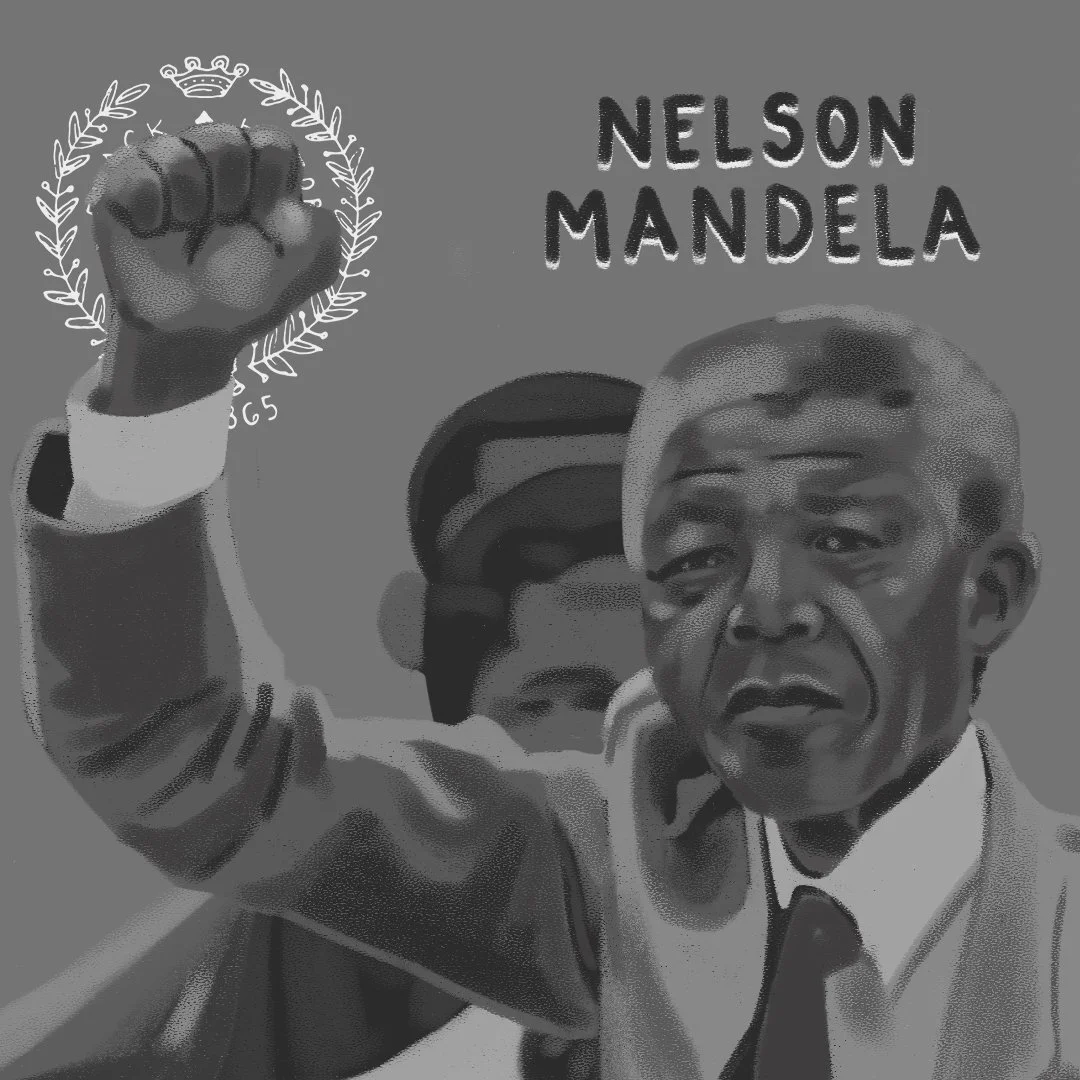
Black History 365 | # 290 Nelson Mandela
Nelson Mandela (born July 18, 1918, Mvezo, South Africa—died December 5, 2013, Johannesburg) was a Black nationalist and the first Black president of South Africa (1994–99). His negotiations in the early 1990s with South African Pres. F.W. de Klerk helped end the country’s apartheid system of racial segregation and ushered in a peaceful transition to majority rule. Mandela and de Klerk were jointly awarded the Nobel Prize for Peace in 1993 for their efforts. After the massacre of unarmed Black South Africans by police forces at Sharpeville in 1960 and the subsequent banning of the ANC, Mandela abandoned his nonviolent stance and began advocating acts of sabotageagainst the South African regime. He went underground (during which time he became known as the Black Pimpernel for his ability to evade capture) and was one of the founders of Umkhonto we Sizwe (“Spear of the Nation”), the military wing of the ANC. In 1962 he went to Algeria for training in guerrilla warfare and sabotage, returning to South Africa later that year. On August 5, shortly after his return, Mandela was arrested at a road block in Natal; he was subsequently sentenced to five years in prison. After retiring from politics in 1999, he remained a devoted champion for peace and social justice in his own nation and around the world until his death in 2013 at the age of 95.
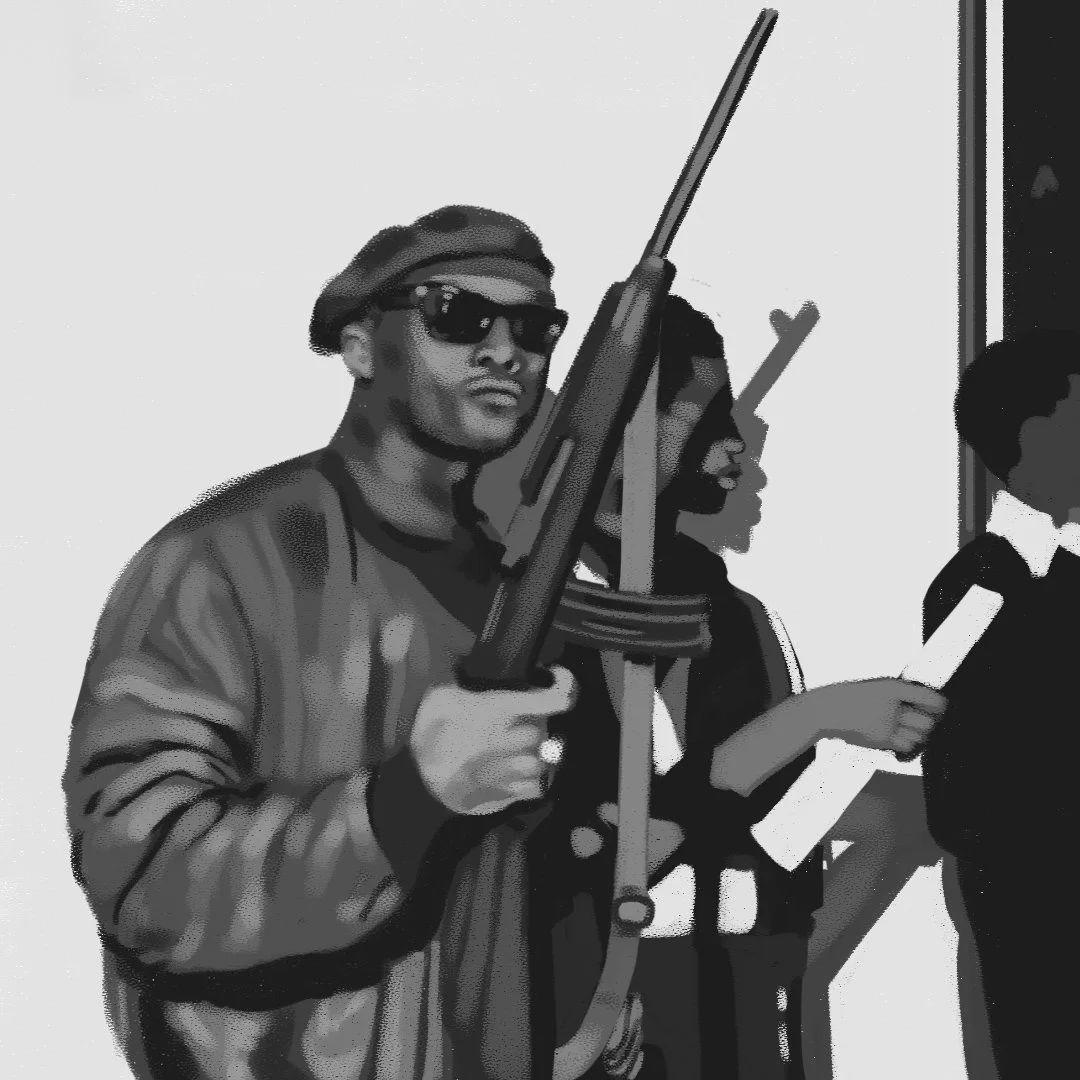
Black History 365 | # 289 The Black Liberation Army
“We are hungry please let us in, we are hungry please let us in,” a quote from Tupac Shakur poignantly explains the birth of more radical revolutionary movements. The U.S. Department of Justice defines The Black Liberation Army (BLA) as an urban guerrilla group closely patterned after the principles of Carlos Marighella. The BLA emerged in the 1970s as one of the most radical and uncompromising forces in the Black freedom struggle. Born from the repression of the Black Panther Party, the BLA was a direct response to police violence, systemic racism, and the unyielding war the U.S. government waged against Black revolutionaries. Emerging from the repression of the Black Panther Party – After the FBI’s COINTELPRO program waged war on the Panthers, assassinating leaders like Fred Hampton and forcing others into exile or imprisonment, some members refused to surrender. The BLA took the fight underground. The U.S. government responded with ruthless repression. The BLA was labeled a terrorist organization, and law enforcement dedicated entire task forces to dismantling its cells. Many members were killed or arrested. From Assata Shakur, Mutulu Shakur, to Sundiata Acoli to Jalil Muntaqim. Dead or in jail. Again in the poignant words of Tupac Shakur, "You're hungry. You reached your level…we was asking with The Panthers...now those people that were all asking they're dead or in jail. Now what do you think we're gonna do?...Ask?"
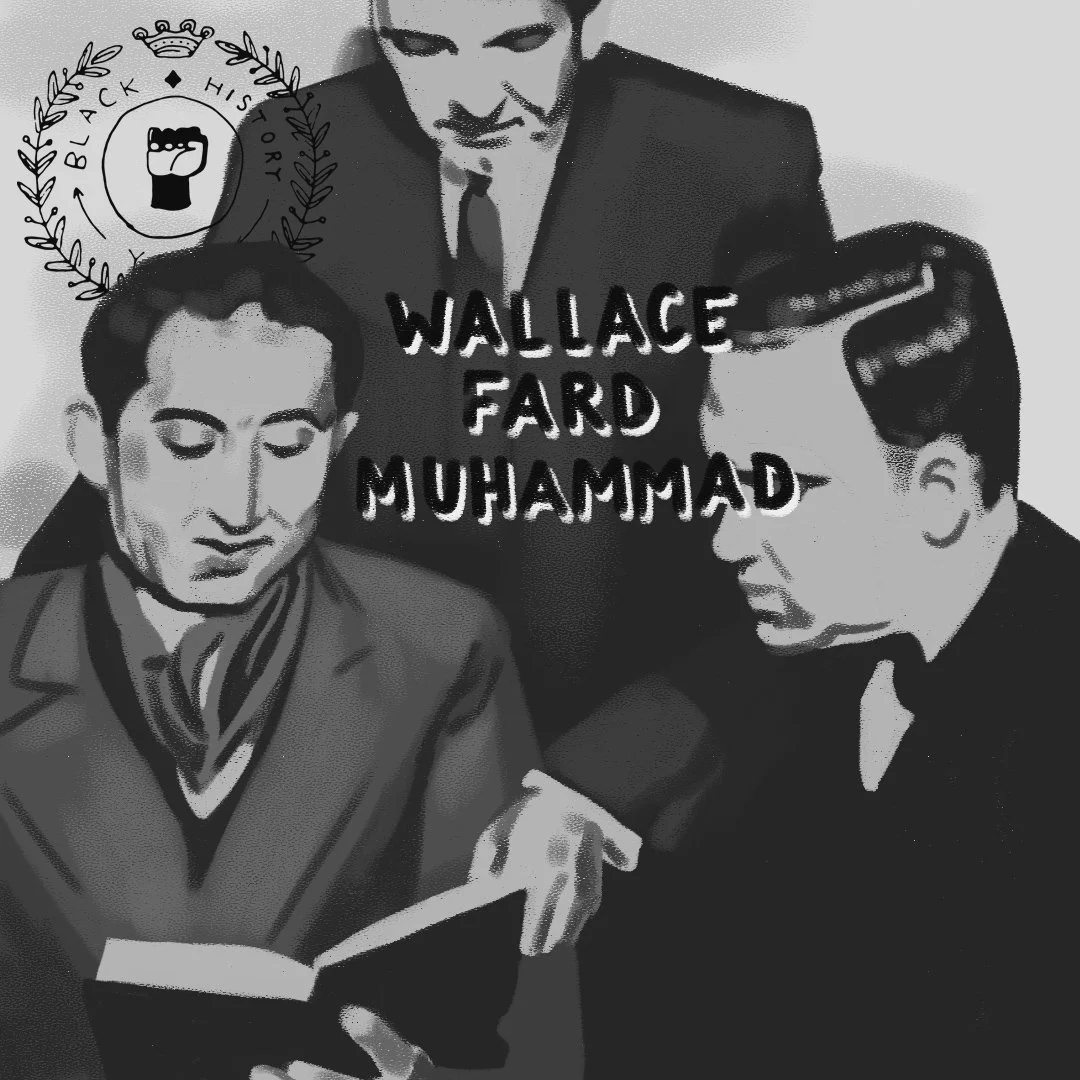
Black History 365 | # 288 Wallace Fard Muhammad
Wallace Fard, also known as W. Farad Muhammad, the Prophet, was founder the first Temple of Islam which evolved into the Nation of Islam or its modern-day media dubbed Black Muslims. Authentic.
According to Fard he was born in Mecca to wealthy parents in the tribe of Koreish, the tribe of the Prophet Mohammad. According to FBI records Fard was born in 1891 in New Zealand. He arrived in the United States in 1913 and briefly settled in Portland, Oregon. Fard was arrested in California in 1918. After spending time in San Quentin Prison in California, Fard was released and moved to Detroit, Michigan.
Fard’s exact arrival date in Detroit is unknown, but once he arrived he made a meager living peddling umbrellas and silks door-to-door in Detroit’s African American community called “Paradise Valley.” At some point Fard began promoting a new faith he believed would liberate Detroit spiritually, psychologically and financially. He began to preach that Christianity was a false religion. He particularly denounced Colonial empires as exploiters of the black race and called on his followers to join his Temple of Islam and replace their last names with “X” in order to renounce their slave ancestry. These Colonial empires he referred to as “White Devils.”
During this period Detroit’s burgeoning African American population was ravaged by the Great Depression. Fard’s teachings became popular solace for many in the African American community. Fard’s First Temple of Islam included the Fruit of Islam, a military-like organization of black male converts, a Muslim Girls’ Training Corps Class and a University of Islam which, despite its name, was mainly focused on elementary and high-school level education.
Fard disappeared in 1934. One of his disciples, Elijah Poole, who became the Honorable Elijah Muhammad, succeeded Fard and by World War II had built the Temple of Islam into a network of mosques across the United States. Salute.